Home / War and Conflict / Tehran Reels Under Toxic Black Rain After Oil Depot Strikes
Tehran Reels Under Toxic Black Rain After Oil Depot Strikes
14 Mar
Summary
- Israeli drone strikes caused fires at oil depots near Tehran.
- Toxic chemicals mixed with rain, creating hazardous black rain.
- Pollution levels in Tehran are a long-standing, worsening problem.
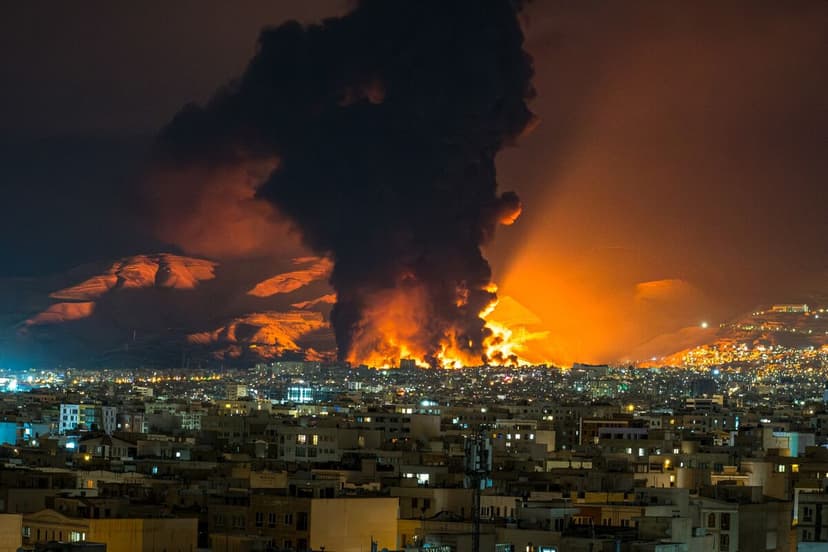
On March 8, black rain fell on Tehran after Israeli drone strikes hit oil depots on the city's outskirts. The resulting fires released pollutants that mixed with rain clouds, causing toxic chemicals to rain down on the capital. This event has drawn parallels to a similar incident 35 years ago when oil field fires in Kuwait, caused by Gulf War combat, led to widespread pollution across Iran.
Experts indicate that the recent strikes, occurring closer to Tehran, will have a more significant impact on the city of 18.5 million. The attacks represent the conflict's single largest pollution incident to date. Iranian authorities initially advised residents to stay indoors due to the potential for chemical burns and lung damage, though later encouraged participation in state rallies.
Tehran has long struggled with severe air pollution from vehicles, heavy industries, and its geographical location at the base of the Alborz mountains, which trap pollutants. The March 8 rainfall, instead of cleansing the air, likely worsened the situation by mixing pollutants into water, increasing their toxicity and absorption potential.
Communication disruptions have hindered full assessment of the pollution's scale, but documentation is crucial for future accountability and cleanup. Concerns remain high for further attacks in the region, given its extensive oil and gas infrastructure, with potential for catastrophic environmental repercussions.