Home / War and Conflict / Stealth Jets: The Physics of Invisibility
Stealth Jets: The Physics of Invisibility
20 Mar
Summary
- Stealth aircraft use angular geometry to deflect radar waves away from receivers.
- Radar-absorbent materials convert radar energy into heat, reducing detection.
- Infrared suppression hides engine heat by cooling and dispersing exhaust gases.
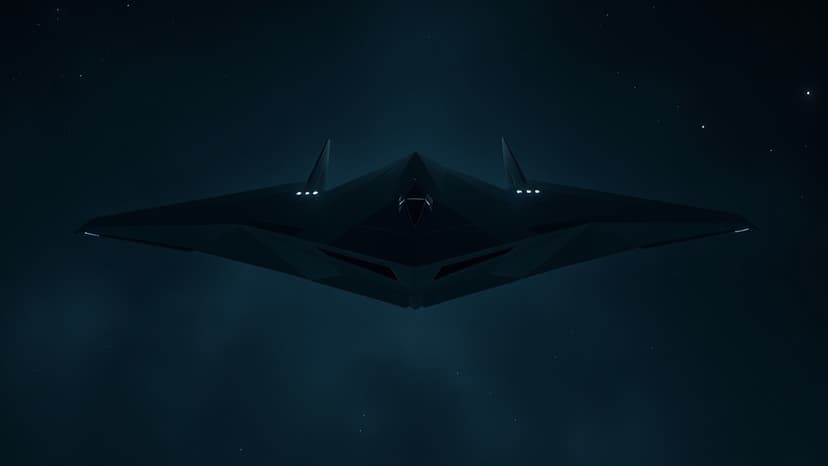
Military stealth aircraft do not vanish but are engineered to make detection difficult. This is achieved through several key principles.
Geometry is crucial, with angular, faceted surfaces designed to deflect radar waves away from receivers. This design philosophy, evident in aircraft like the F-117 Nighthawk, aims to drastically reduce the radar cross-section.
Radar-absorbent materials, including composites and specialized coatings, are structurally integrated. These materials convert radar energy into heat, further minimizing detection signals. Maintaining these coatings is vital, as degradation can compromise stealth capabilities.
Modern defense systems also utilize infrared detection. Stealth aircraft counter this by burying engines deep within the airframe and shaping exhaust nozzles to cool and disperse hot gases. Integrated infrared suppression, as seen in the F-35, is essential for comprehensive stealth.
Stealth is also a matter of doctrine and operational discipline. Aircraft use techniques like frequency hopping to make their own electronic emissions difficult to detect and triangulate. Pilots are trained to suppress unnecessary transmissions during missions.
It is important to note that no stealth aircraft is completely invisible. Advanced radars, particularly low-frequency ones, and bistatic radar configurations can still detect them, albeit with reduced precision. Russia and China have invested in counter-stealth technologies for this reason. An F-117 was famously downed in 1999 by a Soviet-era radar operating at a frequency not fully accounted for in its design.