Home / War and Conflict / Russia Bets on 20km Balloon Network for Battlefield Comms
Russia Bets on 20km Balloon Network for Battlefield Comms
21 Feb
Summary
- Russia tests stratospheric balloons for battlefield communications.
- Barrazh 1 aims to lift 5G relay equipment 20km high.
- Wind patterns complicate sustained coverage over Ukraine.
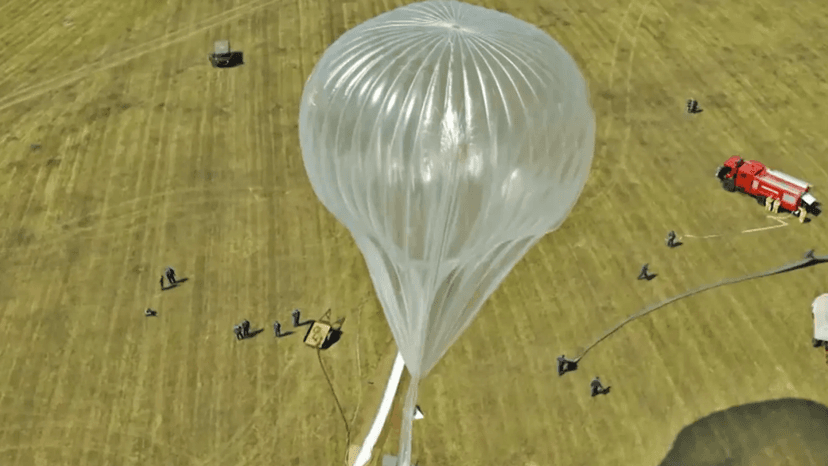
Russia is currently testing a novel stratospheric balloon system, dubbed Barrazh 1, designed to re-establish battlefield communications. This initiative follows intensified controls on unauthorized Starlink terminals in Russian-occupied Ukrainian territories. The Barrazh 1 platform is engineered to transport communications relay equipment to an altitude of approximately 20 kilometers above ground.
Developers assert that the system predominantly utilizes domestically manufactured components and is capable of supporting a 5G non-terrestrial network station for extended periods. The concept involves a floating relay layer intended to assist ground forces when satellite connectivity becomes unreliable. Ukrainian defense sources suggest Aerodrommash and Bauman Moscow State Technical University are involved in this project.
A significant obstacle for the Barrazh 1 system is atmospheric dynamics, particularly the dominant westerly transfer winds over most of Ukraine, which flow from west to east. This meteorological condition means balloons launched from Russian-controlled territory would likely drift further into Russia, rather than towards Ukrainian positions. While altitude adjustments can be made to exploit wind currents, maintaining a stable relay network over a fixed operational area remains complex due to uncontrollable wind speeds and directions.
Historically, high-altitude balloons have served reconnaissance and experimental purposes, but their deployment for modern communications payloads is a new application. While theoretically offering temporary redundancy for failing satellite links, the practical implementation faces substantial challenges in ensuring continuous coverage over contested territories due to prevailing wind patterns.