Home / War and Conflict / Indian Navy's Eyes: 50 Years of Ocean Surveillance
Indian Navy's Eyes: 50 Years of Ocean Surveillance
18 Nov
Summary
- Indian Navy marks 50 years of long-range maritime reconnaissance.
- Operations evolved from Super Constellation to modern P-8I aircraft.
- Surveillance supports military operations and maintains situational awareness.
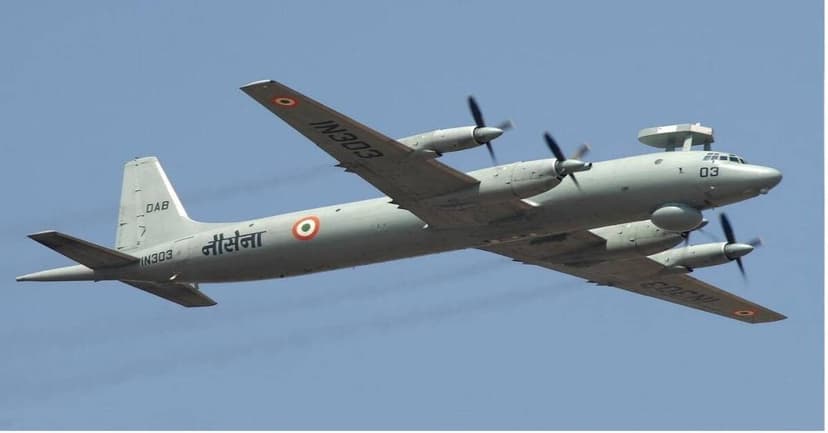
The Indian Navy has commemorated 50 years of its Long-Range Maritime Reconnaissance (LRMR) operations. This milestone marks half a century of airborne surveillance across the Indian Ocean Region. The navy's journey began with the Lockheed Super Constellation and has since evolved significantly.
Initiated following the 1971 war, the need for dedicated LRMR aircraft became apparent. The Indian Naval Air Squadron (INAS) 312, established in 1976, initially operated Super Constellations. This was followed by the induction of Soviet-origin Ilyushin Il-38 in 1977 and Tupolev Tu-142M in 1988, enhancing anti-submarine warfare and surveillance reach.
In 2013, the modern Boeing P-8I aircraft were inducted into INAS 312, significantly upgrading intelligence, surveillance, and strike capabilities. Currently, P-8I aircraft operate from INAS 312 and INAS 316, maintaining vital surveillance over India's maritime approaches.
These LRMR aircraft have been instrumental in supporting numerous military operations, including Operations Cactus, Vijay, Parakram, and Sindoor. They also play a critical role in anti-piracy and search-and-rescue missions, ensuring India's maritime interests are protected.


