Home / War and Conflict / Koreas Race Ahead in Hypersonic Missile Tech
Koreas Race Ahead in Hypersonic Missile Tech
13 Oct
Summary
- Hypersonic missiles travel at Mach 5, reducing response times and altering strategic balance.
- Both Koreas are developing missiles that are difficult to track and intercept.
- South Korea's test signals a new deterrence capability against adversaries.
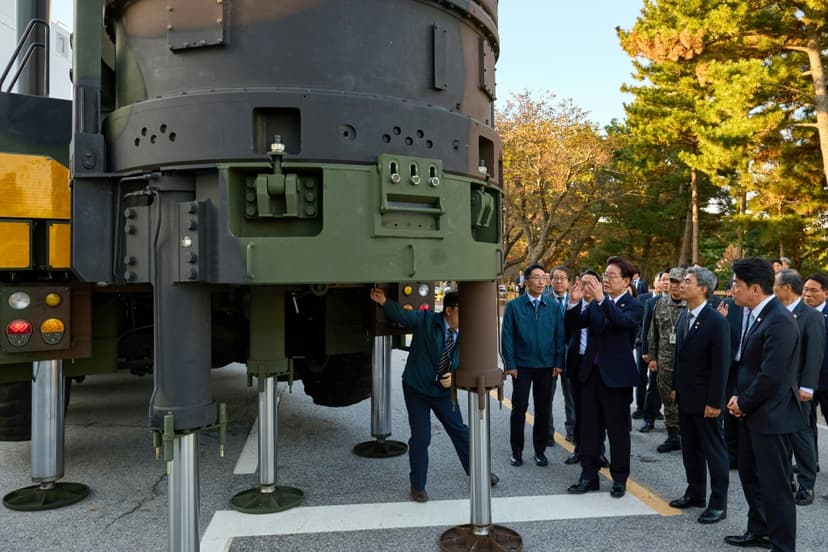
South Korea successfully test-fired its first indigenous hypersonic missile last week, a development that follows North Korea's announcement of an AI-assisted intermediate-range hypersonic missile launch. Hypersonic weapons are defined by their ability to travel at Mach 5 or faster, significantly reducing flight times and response opportunities for adversaries.
These advanced missiles can carry conventional or nuclear warheads and possess the capability to maneuver in mid-flight, making them extremely difficult for current missile defense systems to track and intercept. South Korea's test focused on heat-resistant materials, guidance systems, and low-altitude maneuverability, highlighting the weapon as a "key strategic asset."
North Korea claims its recent hypersonic missile launch, allegedly employing artificial intelligence, featured a "wave-like trajectory" and low-altitude capabilities designed to evade detection by South Korea and Japan. Experts suggest North Korea is perfecting this technology with Russian assistance, though it may still lag in precise maneuverability.
The escalating development of hypersonic weapons by both Koreas signals a potential intensification of the arms race on the peninsula. This technological race has broader implications for regional security, potentially impacting the defense strategies of South Korea, Japan, and the United States.


