Home / War and Conflict / How One Boat Changed World War II Strategy Forever
How One Boat Changed World War II Strategy Forever
30 Jul
Summary
- The Higgins Boat patented December 8, 1941, featured a bow ramp.
- It enabled troops to land directly on enemy beaches.
- General Eisenhower called it essential to Allied strategy.
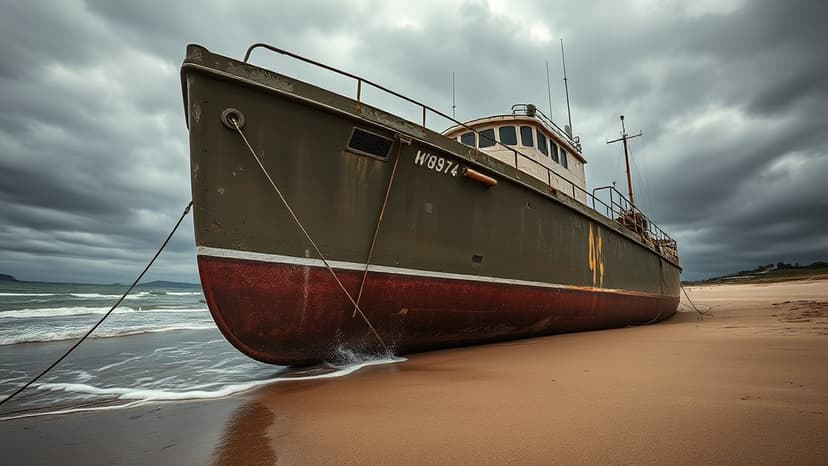
Andrew Higgins patented a groundbreaking landing craft on December 8, 1941, the day after the attack on Pearl Harbor. This invention, known as the Higgins Boat or LCVP, featured a retractable bow ramp that revolutionized amphibious assaults during World War II.
Before this innovation, troops had to climb over the sides of boats under fire. Higgins' design, initially rooted in his work building shallow-water boats for the lumber industry, allowed for direct landings on enemy beaches. This drastically improved troop and equipment unloading speed and safety.
The Higgins Boat became indispensable for Allied forces, used in numerous operations across North Africa, Italy, Normandy, and the Pacific. Its utility was so immense that General Dwight D. Eisenhower stated the war's strategy would have been critically different without it. Higgins Industries became a wartime powerhouse, producing over 20,000 boats using assembly-line methods. By 1943, a majority of US Navy vessels were designed by Higgins. Andrew Higgins died in 1952, and his company closed seven years later, but his landing craft's legacy endures.


