
Home / War and Conflict / Gaza's Tent Cities: A Crisis of Dignity and Sanitation
Gaza's Tent Cities: A Crisis of Dignity and Sanitation
7 Jun
Summary
- Displaced Gazans build makeshift toilets inside tents due to lack of proper facilities.
- Communal toilets present hygiene nightmares and safety concerns, especially for women.
- Lack of funds prevents many families from affording even basic latrine construction materials.
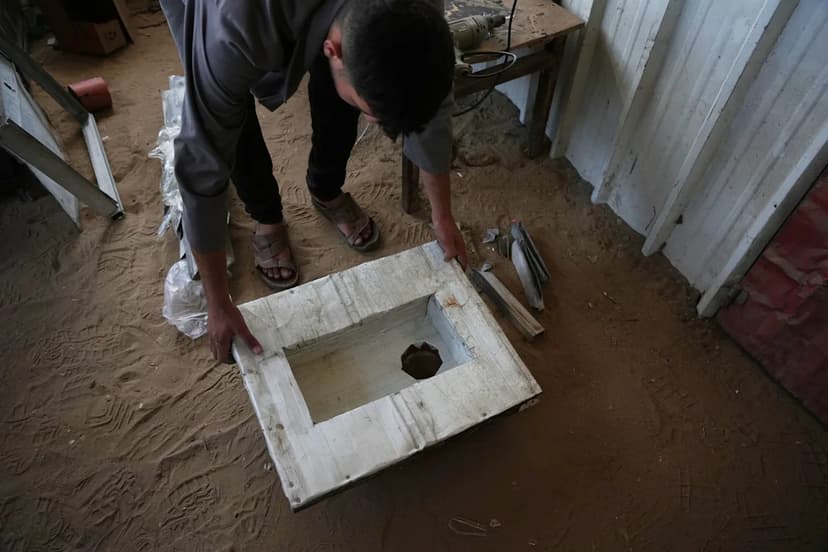
In the sprawling tent cities of southern Gaza, displaced Palestinians grapple with an extreme sanitation crisis. With no proper toilets available, families like Mostafa Shaaban's resort to building makeshift latrines inside their tents, a desperate measure for dignity amid deplorable conditions. These rudimentary facilities, often just a pit covered by a slab and a salvaged seat, emit foul odors and attract insects, yet are preferred over the crowded, unsanitary communal latrines.
The communal facilities themselves present a dire situation. Long queues form for the meager number of toilets, which offer minimal privacy with only thin cloths for separation. Women express significant fear of using them after dark, adding another layer of vulnerability. The collapse of over 80% of sewage pumping stations due to the ongoing conflict exacerbates the problem, leading to widespread wastewater pooling and unsanitary environments.
Improving these basic conditions proves challenging due to severe resource limitations. Building even a simple latrine requires materials like pipes and concrete, which are beyond the financial reach of many families. Imported construction supplies essential for reconstruction have entered Gaza at a glacial pace, partly due to political deadlock, delaying any hope for substantial infrastructure repair. The situation highlights a critical struggle for basic human rights and dignity.
