
Home / War and Conflict / Gaza Births Rise Amid War, Facing Grim Realities
Gaza Births Rise Amid War, Facing Grim Realities
30 Apr
Summary
- Caesarean section rates increased due to war-related travel difficulties.
- Malnutrition and poor hygiene amplify post-surgery infection risks.
- Mothers give birth in harsh conditions, facing severe health challenges.
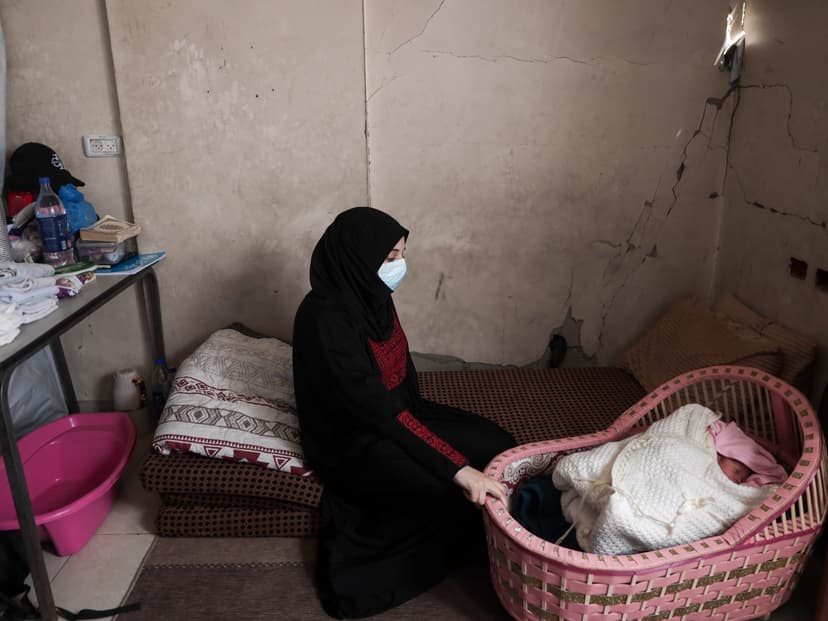
In Gaza, the frequency of caesarean sections has seen a rise of about 2 percent since the war's onset, now representing a quarter of all births. Dr. Fathi al-Dahdouh notes that travel difficulties force many pregnant women to arrive late for delivery, increasing the need for emergency surgeries.
Women like Duha Abu Yousef, who underwent a C-section due to severe anemia worsened by famine, face immense health challenges. The lack of food and nutritional supplements has weakened many mothers, impacting their pregnancies and recovery.
Post-operative complications, particularly infections, are a growing concern. Malnutrition, displacement into overcrowded tents with poor sanitation, and a lack of clean water and medical supplies create a dangerous environment for wound healing and recovery.
Dr. Ruba al-Madhoun points out that bombardments can lead to critical conditions like placental abruptions requiring immediate surgery. Shortages in medical equipment and staff further pressure the healthcare system, often making C-sections the quickest available option.
Sanaa al-Shukri's experience with a C-section wound infection, exacerbated by unsanitary living conditions in a tent, underscores the severe difficulties mothers face. The harsh environment, with heat, insects, and lack of basic amenities, makes postpartum recovery an arduous struggle.
