Home / Technology / WebMCP: AI Agents Speak Website's Language
WebMCP: AI Agents Speak Website's Language
12 Feb
Summary
- WebMCP standardizes AI agent interaction with websites via a new browser API.
- It drastically cuts costs and boosts reliability by replacing scraping.
- WebMCP focuses on human-in-the-loop workflows, not fully autonomous agents.
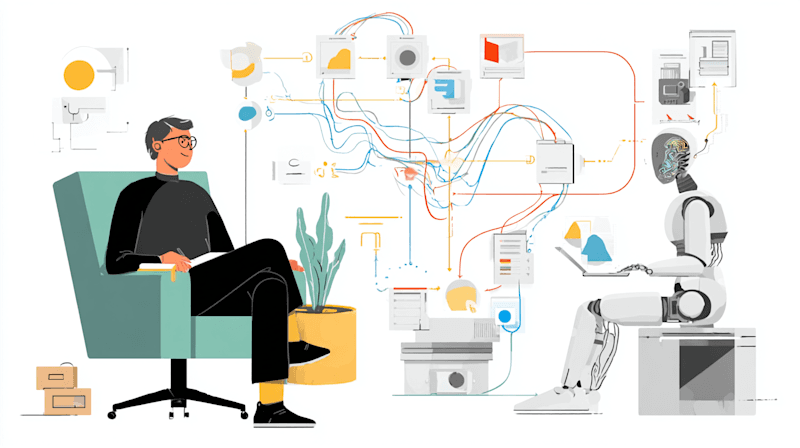
The way AI agents interact with websites is set to transform with the introduction of the Web Model Context Protocol (WebMCP). Developed by Google and Microsoft, this emerging standard provides a new browser API, navigator.modelContext, enabling websites to directly offer callable tools to AI agents. This innovation aims to eliminate the costly and fragile process of AI agents guessing their way through websites by interpreting raw HTML or screenshots.
WebMCP introduces two key APIs: the Declarative API for standard HTML forms and the Imperative API for complex JavaScript interactions. Through these, a single tool call can replace dozens of sequential agent actions, significantly reducing token consumption and inference costs. This client-side approach allows developers to leverage existing JavaScript logic, accelerating development velocity and improving reliability by removing guesswork about page structure.
The standard prioritizes human-in-the-loop workflows, ensuring AI agents collaborate with users rather than operate autonomously. This contrasts with fully autonomous agent paradigms and focuses on shared visual context within the user's browser session. WebMCP is positioned as a complementary technology to back-end protocols like Anthropic's MCP, serving different interaction patterns.
Currently in early preview in Chrome 146 Canary, WebMCP is expected to gain broader adoption. Observers anticipate formal announcements by mid-to-late 2026. The goal is to become a universal interface for AI agent web interactions, akin to USB-C, replacing current complex and brittle scraping strategies with a standardized, working software solution.