Home / Technology / Robotics Race: US Tariffs Shift Global Competition
Robotics Race: US Tariffs Shift Global Competition
31 Aug
Summary
- US tariffs target foreign-made advanced robotic systems and drones.
- China leads in humanoid robot manufacturing by volume and cost.
- Global robotics market may fragment into regionalized ecosystems.
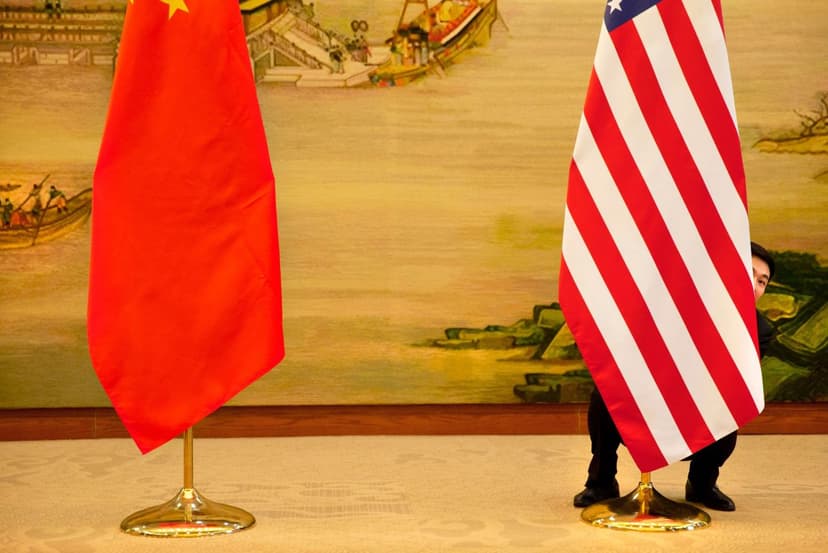
In July and August of 2026, Washington enacted significant restrictions on foreign-made advanced robotic systems, including steep tariffs on imported drones and their components, citing national security. These measures, set to take effect in September 2026, with further component tariffs in 2027, are part of a broader U.S. strategy to limit foreign technology in critical industries.
China currently dominates global humanoid robot manufacturing, with Chinese firms accounting for the vast majority of shipments. This dominance is driven by scale, supply-chain depth, and cost advantages that U.S. companies struggle to match. Consequently, Chinese robots are being deployed at lower price points, accelerating technology improvement through real-world data.
Analysts predict these restrictions will lead to a more fragmented global robotics market rather than a clear U.S.-China split. Chinese companies are expected to target growing demand in price-sensitive markets across Europe, Southeast Asia, Latin America, and the Middle East. This trend mirrors the expansion of Chinese electric vehicles globally.
The drone market already illustrates this division, splitting into U.S.-led and China-led ecosystems. Western manufacturers may find success in high-security, long-range autonomous systems, while Chinese firms continue to lead in low-cost production. Future competition may hinge on enabling technologies like next-generation energy and payload architectures.
This evolving landscape suggests a shift towards more regional robotics markets. Manufacturers in countries like Japan, South Korea, and Taiwan may offer a middle ground between low-cost Chinese offerings and premium U.S. products. Ultimately, companies are likely to design machines tailored to the specific needs and conditions of their home markets.


