Home / Technology / Space Force Poised for Major Expansion
Space Force Poised for Major Expansion
23 Jan
Summary
- Space Force plans to double personnel in 5-10 years.
- Space is now viewed as a contested military domain.
- Service members are needed for expanding operational demands.
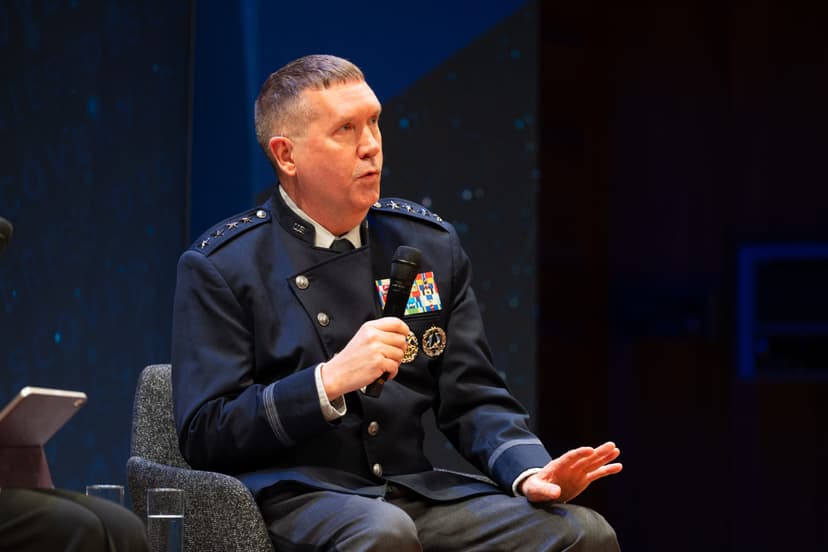
The U.S. Space Force is projected to potentially double its personnel within the next five to ten years, according to General Shawn Bratton, vice chief of space operations. This anticipated growth stems from the evolving perception of space as a contested military domain, rather than solely a supporting utility.
The service's second-highest-ranking officer indicated that the Space Force is under pressure from the Army, Navy, and Air Force to accelerate the development and delivery of new capabilities. Currently, the Space Force comprises approximately 10,000 uniformed members and 5,000 civilians.
Decades ago, military space operations primarily focused on functions like GPS and satellite communications. However, adversaries' advancements in space-based surveillance and targeting have necessitated a strategic reorientation. This shift underscores the critical role of space assets not just as enablers but as integral components of future conflict scenarios.
The Pentagon's evolving strategy now includes defending U.S. space assets and potentially denying adversaries access to their own space capabilities. This requires robust coordination across all military branches. The Space Force is integrating its operations within combatant commands to ensure space capabilities are synergistically employed with air, land, and maritime forces.
A long-range planning initiative, the Objective Force study, is underway to define the Space Force's needs over the next 15 years, focusing on future missions and operating environments. This includes exploring capabilities for cislunar space and assessing the national security implications of increasing commercial activity beyond Earth.
Concepts like 'dynamic space operations' are being considered, moving away from static satellite orbits to more maneuverable spacecraft. While ideas like in-orbit refueling are being debated, their military advantages in conflict remain under evaluation. Ultimately, the Space Force is preparing for a more prominent role as satellites become central to modern warfare.