

Home / Technology / Space Force Contracts $3.2 Billion for Orbital Missile Defense
Space Force Contracts $3.2 Billion for Orbital Missile Defense
25 Apr
Summary
- Twelve companies awarded contracts for space-based interceptors.
- Contracts total up to $3.2 billion for rapid prototyping.
- Defense aims to shield US territory from missile threats.
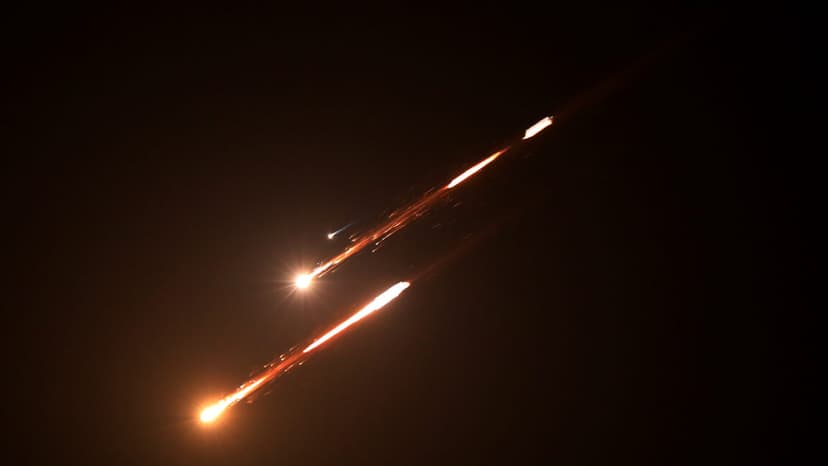
The US Space Force has initiated the Golden Dome initiative, a significant endeavor to bolster national defense through a multilayer system. As of late 2025 and early 2026, the Space Force awarded contracts valued at up to $3.2 billion to twelve companies using Other Transaction Authority agreements. This mechanism allows for rapid prototyping and aims to attract diverse contractors for developing Space-Based Interceptors (SBIs).
The selected companies include established aerospace giants like SpaceX and Lockheed Martin, alongside newer firms such as Anduril Industries. These contracts are focused on early-stage development and technology demonstrations, not full-scale production. The initiative seeks to counter advancing adversary capabilities and is intended to demonstrate an initial orbital interceptor capability by 2028.
Golden Dome is envisioned as a comprehensive defense strategy, integrating SBIs with ground- and air-based systems to address drone, ballistic, and cruise missile threats. The recent conflict involving Iran highlighted the depletion of existing interceptor stocks and the limitations of current missile defenses, underscoring the urgency of such programs. The US plans to replenish its interceptor inventory and integrate it into the Golden Dome's layered defense approach.
Despite the significant investment and ambitious goals, the total cost projections for Golden Dome, estimated by the Trump administration at $185 billion and by some analysts at several trillion dollars, remain a subject of debate. Officials emphasize affordability and scalability, stating that production will only proceed if a capability can be achieved cost-effectively, as alternative defensive options exist. The program's architecture remains largely classified, making independent cost and schedule assessments challenging.
