Home / Technology / Cornell's Ultrablack Wool: A Material Darker Than Night
Cornell's Ultrablack Wool: A Material Darker Than Night
12 Dec
Summary
- New fabric inspired by riflebird feathers achieves record blackness.
- Material absorbs 99.87% of light, exceeding previous ultrablack technologies.
- Developed fabric is wearable, cheaper, and easier to produce than Vantablack.
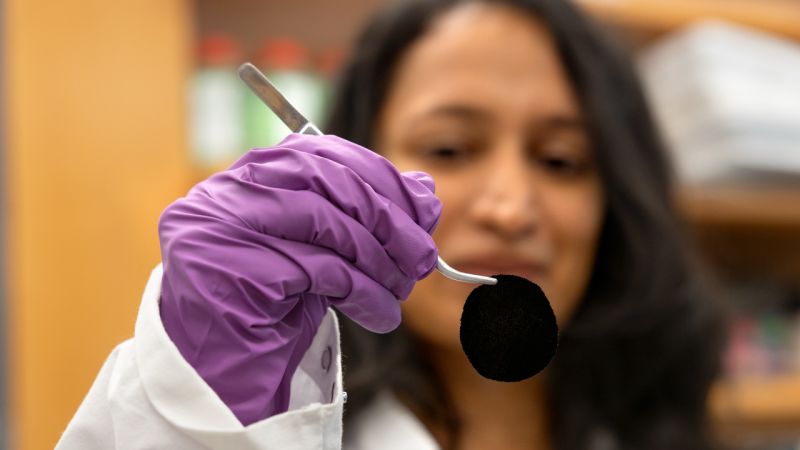
Cornell University researchers have engineered a groundbreaking new fabric, dubbed Ultrablack Wool (UBW), inspired by the feathers of New Guinea's riflebird. This innovative material achieves an unprecedented level of blackness, absorbing 99.87% of all light, a feat that has astonished observers who compare it to a black hole.
The creation process involves dyeing white merino wool with a synthetic melanin pigment and then using plasma etching to form microscopic, spiky structures. These "nanofibrils" effectively trap light, making the fabric exceptionally dark. Unlike Vantablack, a non-fabric coating, UBW is designed for wearability and offers a more economical and simpler manufacturing process.
This biomimetic achievement not only enhances the visual depth of blackness but also offers potential for thermal regulation in apparel and could be adapted for applications in camouflage, solar energy, and aerospace. While challenges like water resistance and mass production remain, this development democratizes access to high-performance ultrablack materials.