

Home / Technology / TurboQuant Won't End AI Memory Shortage, Analysts Say
TurboQuant Won't End AI Memory Shortage, Analysts Say
11 Apr
Summary
- Google's TurboQuant drastically cuts AI memory use by six times.
- Analysts believe it will increase AI performance, not reduce RAM demand.
- Memory makers' stock prices briefly fell upon TurboQuant's announcement.
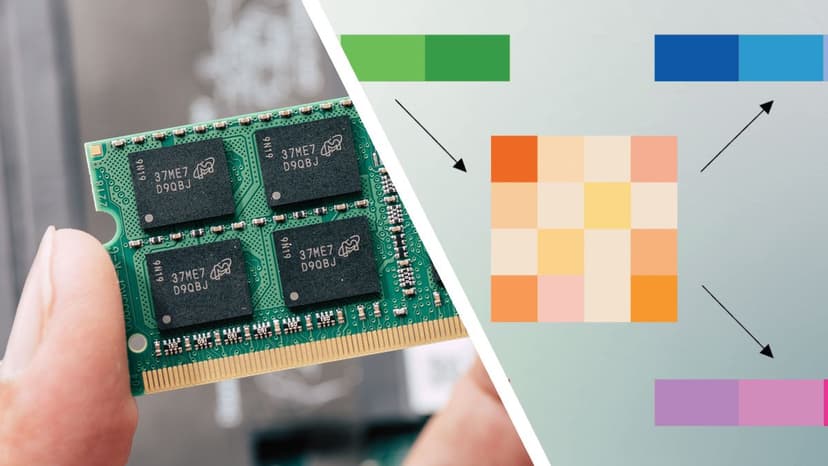
Google's recent announcement of TurboQuant, an algorithm designed to significantly reduce the memory footprint of AI models, has sparked debate about its potential to resolve the current RAM crisis. The technology claims to decrease key-value cache memory usage, which acts as an AI's short-term memory, by a factor of six without noticeably degrading output quality. This advancement theoretically allows AI to maintain performance while consuming considerably less memory.
Despite these claims, industry analysts express skepticism regarding TurboQuant's impact on semiconductor demand. Experts like Lee Jong-wook from Samsung Securities suggest that optimized AI models tend to drive higher demand for AI computing by enabling better performance with existing resources. The prevailing view is that as AI companies prioritize performance over cost, technologies like TurboQuant are unlikely to curb the escalating consumption of RAM by large language models.
Further doubt is cast by Kim Rok-ho of Hana Securities, who notes that compression technologies are not novel and their widespread industry adoption remains uncertain. Even if adopted, the consensus is that TurboQuant and similar innovations will lower cost barriers, thus expanding overall AI usage rather than diminishing demand for DRAM and storage. This perspective aligns with ongoing trends where advancements often lead to greater utilization rather than reduced consumption.
The market's initial reaction saw memory maker stocks decline upon TurboQuant's unveiling on March 24. However, this was a brief fluctuation, as analysts' cautious outlook suggests a continued strong demand for memory. Reports of DDR5 RAM price drops are attributed to consumer resistance rather than supply improvements, and projections indicate a persistent imbalance in RAM supply and demand until at least 2028.

