Home / Technology / Tiny Gadgets Give Objects Personalities
Tiny Gadgets Give Objects Personalities
15 Nov
Summary
- Micro-agent AI avatars called OATs display emotions on E Ink screens.
- OATs use sensors to track object usage and environmental data.
- These AI sprites aim to encourage behavioral changes through care.
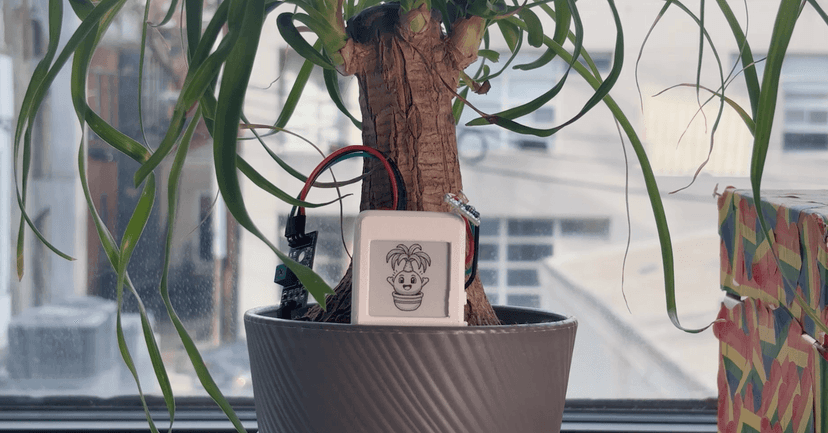
Micro-agent AI avatars known as OATs, developed by Carnegie Mellon PhD student Daehwa Kim, are designed to imbue everyday objects with personalities. These "Object Agent Twins" utilize tiny E Ink displays to show expressive sprites that react to sensor data related to an object's use or environment. The technology aims to foster better habits by creating an emotional connection, similar to virtual pets, but applied to physical items like houseplants or exercise equipment.
The OAT system connects to various sensors, monitoring factors such as moisture, temperature, and motion. The AI sprites, generated using Google Gemini's Nano service, display a range of emotions reflecting the object's state or usage. Users can customize these behaviors through a web portal, defining "positive" and "negative" triggers based on the object's purpose and user-defined goals. For instance, an OAT attached to a skateboard might display sadness if unused for several days.
While OATs have shown potential in encouraging user behaviors, their current battery life is a limitation, lasting only three to four days without additional sensors. Kim has observed users employing OATs in three primary ways: to indicate if an object is being used, to warn others about an object's operation (like a 3D printer), or to track personal habits, such as exercise routines. The project also sparks discussion on the anthropomorphism of AI and its ethical implications.
Kim emphasizes that OATs feature limited interactions, focusing solely on expressive emotions to avoid over-reliance or misjudgment of AI capabilities. She believes that while anthropomorphism can be beneficial for behavior modification, as seen with people naming their cars, it's crucial to approach relationships with future AI cautiously and responsibly. The project was presented at the ACM Symposium on User Interface Software and Technology, receiving honorable mention awards.


