Home / Technology / Gilmour Space Taps Transcelestial Lasers for Satellite Data
Gilmour Space Taps Transcelestial Lasers for Satellite Data
2 Feb
Summary
- Transcelestial's laser tech aims to boost satellite data transmission speeds.
- A demonstration is set for a Gilmour Space spacecraft in 2026.
- Partnership could lead to future satellite integration and Australian ground station.
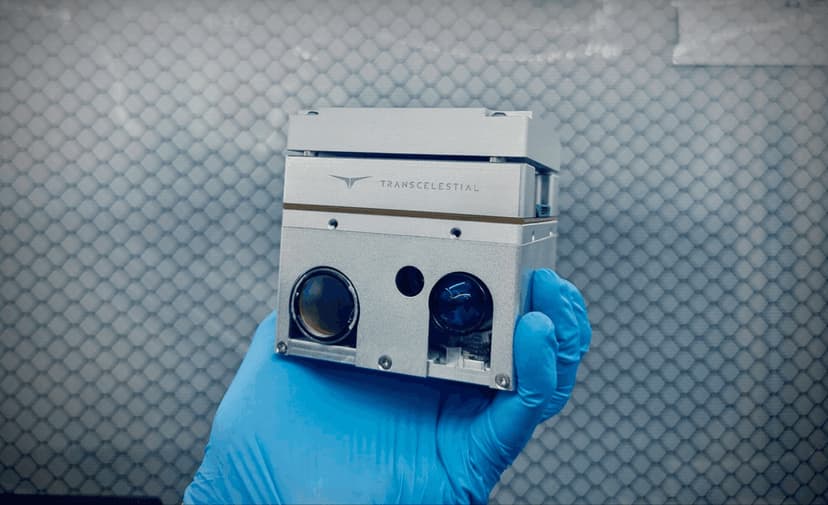
Transcelestial, a Singaporean startup specializing in optical communications, has announced a strategic partnership with Australia's Gilmour Space Technologies. This collaboration aims to enhance satellite data transmission by incorporating Transcelestial's laser communication technology into Gilmour Space spacecraft.
A demonstration of Transcelestial's terminal is slated for a Gilmour Space satellite launching on a SpaceX Transporter-18 mission later this year. This test will evaluate the efficacy of using lasers for high-speed data transfer from orbit to the ground, a critical bottleneck in current satellite operations.
If the demonstration proves successful, it could pave the way for widespread adoption of Transcelestial terminals on future Gilmour Space satellites. The companies are also exploring the potential establishment of a Transcelestial optical ground station in Queensland, Australia.
Transcelestial, which has experience with terrestrial laser communications, is expanding its offerings to space. The company believes laser technology, offering speeds vastly superior to radio frequencies, is the future for intercontinental data transfer, akin to undersea cables. Challenges such as weather interference are being addressed through power compensation techniques and a planned network of globally distributed optical ground stations.
Beyond this partnership, Transcelestial is also supplying intersatellite laser terminals for ST Engineering satellites launching on the same Transporter-18 mission. The company plans to leverage its high-volume terrestrial production capabilities for its space business, focusing on achieving the lowest cost per bit in data transmission.
Transcelestial also harbors ambitions for its own constellation of 40 spacecraft in equatorial orbit, designed to offer network capacity exceeding 100 gigabits per second. This constellation, potentially deployable within two years, would provide direct, high-capacity network access for entities like Gilmour Space, though additional funding will be required.