Home / Technology / Self-Driving Trucks: Future of Freight?
Self-Driving Trucks: Future of Freight?
3 Aug
Summary
- Self-driving trucks promise efficiency, safety, and reduced emissions.
- Future scenarios range from government-backed 'G-Roads' to union resistance.
- Drivers may transition to 'first officer' roles or be replaced by AI.
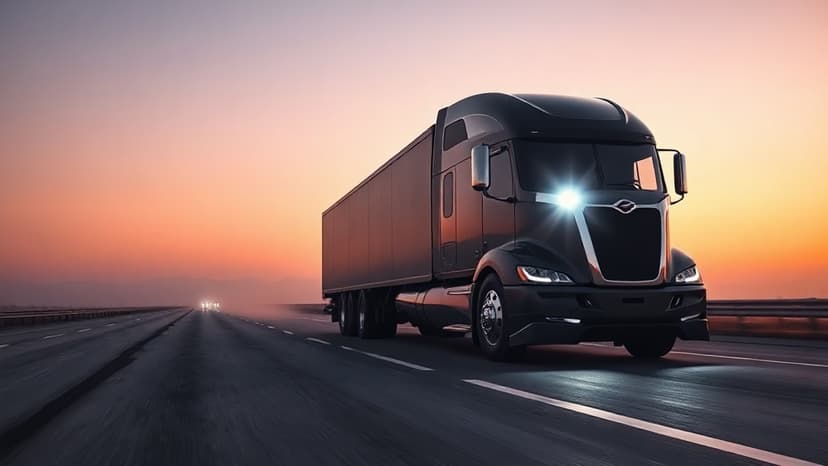
Self-driving trucks are set to revolutionize freight transport, offering substantial economic benefits such as reduced fuel consumption and emissions through optimized routing and smoother driving. These autonomous vehicles can also cover longer distances than human drivers and potentially reduce road congestion.
The adoption of this technology presents varied future possibilities. One scenario envisions a government-industry partnership, creating advanced "G-Roads" to facilitate self-driving vehicles, accelerating the integration of autonomous trucks by the late 2020s. This approach aims to address a growing driver shortage and the expansion of e-commerce.
Conversely, another scenario anticipates significant resistance from unions and car manufacturers, potentially leading to protests and disruptions by 2020. This could slow down the transition, with trucks becoming major disruptors to traffic flow. Delivery companies like FedEx, UPS, and DHL are already exploring advanced route optimization, facing increasing divergence between driver experience and algorithmic logic.
In this evolving landscape, the role of the human trucker may transform. Some may become "first officers" within autonomous truck platoons, managing operations and taking over in complex situations. Other possibilities include delivery trucks functioning as robotic pack mules following human delivery staff, or even self-owning AI-driven trucks operating on demand for Bitcoin.


