


Home / Technology / Robotic Surgery Revolutionizes Stroke Treatment
Robotic Surgery Revolutionizes Stroke Treatment
13 Apr
Summary
- Robotic system masters complex thrombectomy procedures.
- Remote control enables precise neurointervention.
- New tech extends stroke treatment window significantly.
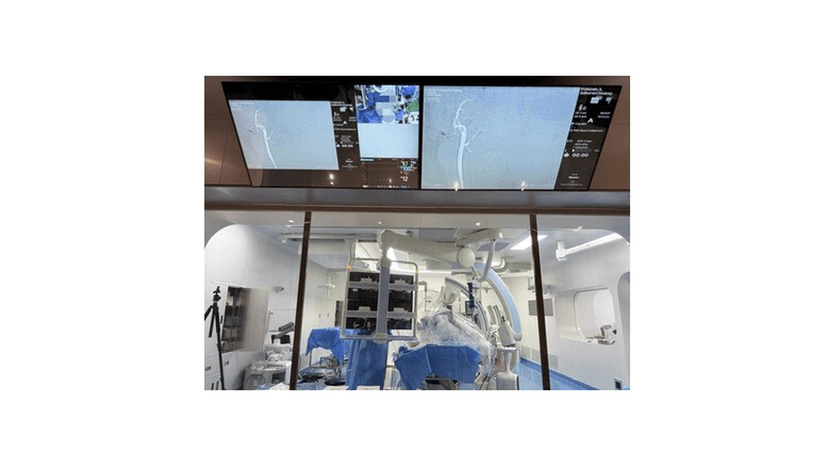
The PANVIS STAR, a vascular interventional robotic system developed by Shenzhen Institute of Advanced Biomedical Robot Co., Ltd. (abrobo), is poised to revolutionize neurointervention. In a recent demonstration, the system successfully completed a full mechanical thrombectomy workflow in an animal model, performing complex tasks such as vessel access, angiography, and stent retriever deployment with remarkable precision. This technology is designed to address limitations in current stroke treatments, where access to mechanical thrombectomy is often restricted.
Key innovations of PANVIS STAR include the PANVIS COF (Catheter-On-Finger) system, which mimics natural hand dexterity for intuitive control, and the ability to manipulate four devices simultaneously through five channels. The system also offers multiple control modes and provides haptic feedback, relaying resistance changes to the operator's fingertips to enhance stability and precision. Its compact design and pan-vascular compatibility make it suitable for a wide range of interventional procedures beyond neurovascular interventions.
Significantly, PANVIS STAR supports remote operation capabilities, laying the groundwork for long-distance surgeries via 5G networks. This was highlighted in a world-first live remote neurointervention demonstration in Shanghai, where an aneurysm coiling and basilar artery stenting procedure was performed miles apart. This advancement promises to improve access to life-saving treatments, especially for patients in remote areas, by enabling high-level care within the critical golden time window.
