Home / Technology / Robots Take Over Milking: Cows and Cows Embrace Tech
Robots Take Over Milking: Cows and Cows Embrace Tech
1 Mar
Summary
- Automated milking systems use robots to milk cows, transforming daily farmer tasks.
- Technology helps address skilled labour shortages and improves farmer work-life balance.
- Robotic milkers are a significant investment, costing $250,000 each.
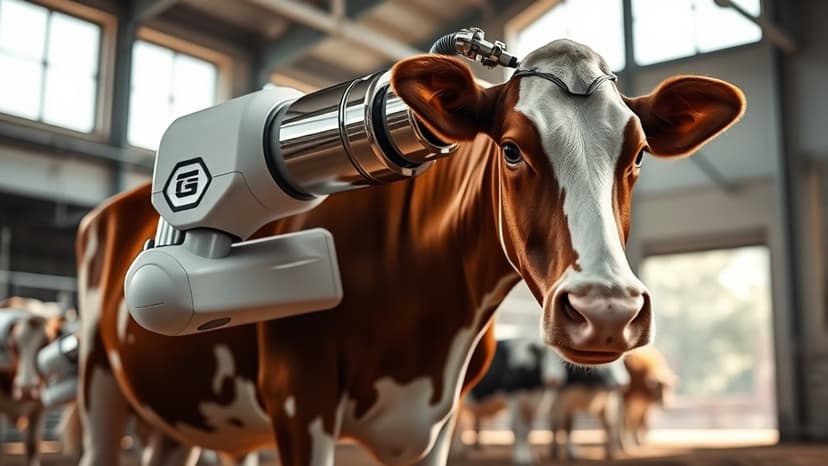
Automated Milking Systems (AMS), commonly known as robotic milkers, are increasingly being adopted by farmers, representing a significant shift in dairy operations. These systems allow cows to be milked when their udders are full, with robots identifying each animal via microchip and using laser-guided systems to attach milking cups.
This technology is particularly impactful in regions like southwest Victoria, a major dairy-producing area in Australia. The adoption of AMS is motivated by a critical shortage of skilled and reliable milkers, a challenge exacerbated by the physically demanding nature of traditional dairy farming.
While the initial investment for a single robotic milker is substantial at $250,000, the long-term benefits are compelling. Farmers can redirect the time saved from manual milking to other crucial aspects of their business, such as herd health and pasture management.
Beyond efficiency, AMS offers a significant improvement in farmer lifestyle. It reduces the need for rigid schedules and allows for more flexibility, enabling farmers to focus on aspects of their work they find more rewarding and potentially encouraging the next generation to enter the industry.
Despite initial challenges, such as cows needing time to adjust to the robots, the technology is proving to be a more humane and sustainable solution. This evolution promises a future where dairy farming is more productive, profitable, and offers a better quality of life for those involved.