Home / Technology / Robot Brains: The Smarter Path to Automated Homes
Robot Brains: The Smarter Path to Automated Homes
2 Sep
Summary
- Full humanoid robots are impractical for unpredictable homes.
- A 'robot brain' AI could manage existing smart devices.
- Wheeled bots with arms offer a practical middle ground.
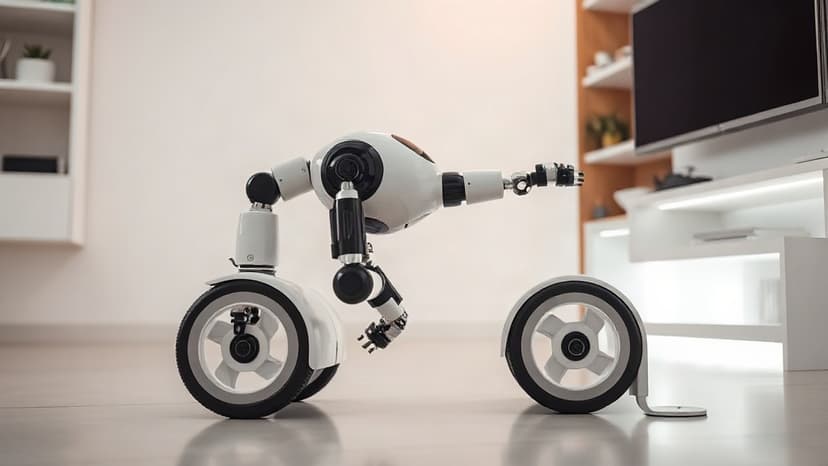
The concept of humanoid robots performing household chores, once science fiction, is rapidly evolving. While companies are showcasing human-shaped bots capable of complex movements, their practicality in domestic environments remains questionable. Homes present unpredictable challenges like stairs and cluttered spaces, making fully humanoid robots less feasible than in controlled factory settings.
Instead, a more promising direction for home robotics lies in an AI-powered 'robot brain.' This central intelligence could autonomously manage and coordinate existing smart devices, adapting to occupants' needs. Imagine a smart home that proactively dispatches a robot vacuum for spills or optimizes energy usage for appliances.
This approach sidesteps the limitations of single, expensive machines attempting to master all tasks. Early concepts like Samsung's Ballie and LG's CLOiD humanoid illustrate this vision, aiming for smart home orchestration. Companies like Tuya are also exploring this with Doova, an AI companion focused on assisting seniors.
The future likely involves a team of specialized robotic devices managed by a coordinated 'robot brain.' While full-sized humanoids may still be some way off, practical solutions like wheeled bots with articulated arms are emerging to handle specific chores, bridging the gap between basic smart devices and advanced robotic assistants.


