
Home / Technology / AI Agents Need New Knowledge Engines
AI Agents Need New Knowledge Engines
5 May
Summary
- Agentic AI requires context-aware knowledge engines.
- Pinecone's Nexus compiles data into task-specific knowledge.
- Nexus aims to reduce agent compute by 85%.
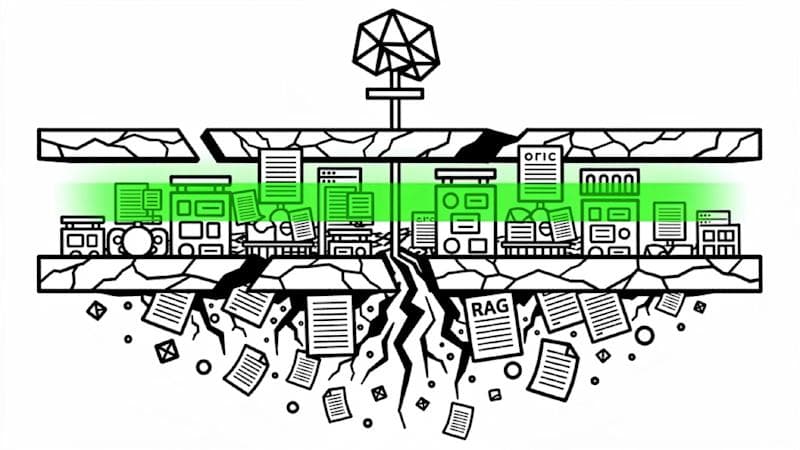
Agentic AI necessitates a new generation of knowledge engines, as traditional retrieval-augmented generation (RAG) pipelines are proving insufficient. VentureBeat's Q1 2026 Pulse survey indicates a decline in standalone vector database adoption, with hybrid retrieval intent growing rapidly. Pinecone has launched Nexus, a knowledge engine engineered for agentic AI. Nexus features a context compiler that transforms enterprise data into persistent, task-specific knowledge artifacts for agents, and a composable retriever for efficient delivery.
This new architecture moves reasoning from inference time to a pre-query compilation stage, addressing the significant compute effort agents expend on rediscovery. Pinecone estimates this re-discovery cycle accounts for 85% of agent compute, leading to unpredictable latency and escalating token costs. Nexus aims to deliver structured, task-ready context, rather than raw documents, enabling agents to complete tasks more deterministically and with greater auditability.
Nexus is designed to complement Pinecone's existing vector database, with the context compiler producing indexed knowledge artifacts. The introduction of Nexus and KnowQL signals a broader industry trend, with companies like Microsoft and Google also developing solutions for agentic AI's data needs. Analysts emphasize that enterprise buyers should prioritize control over features, focusing on cost, governance, and security for successful agentic AI implementation.
