Home / Technology / OpenAI Tests Nvidia's AI Dominance
OpenAI Tests Nvidia's AI Dominance
3 Feb
Summary
- OpenAI seeks alternatives to Nvidia's inference chips since last year.
- Nvidia's $100 billion investment talks with OpenAI are facing delays.
- OpenAI seeks faster inference hardware for specific AI tasks.
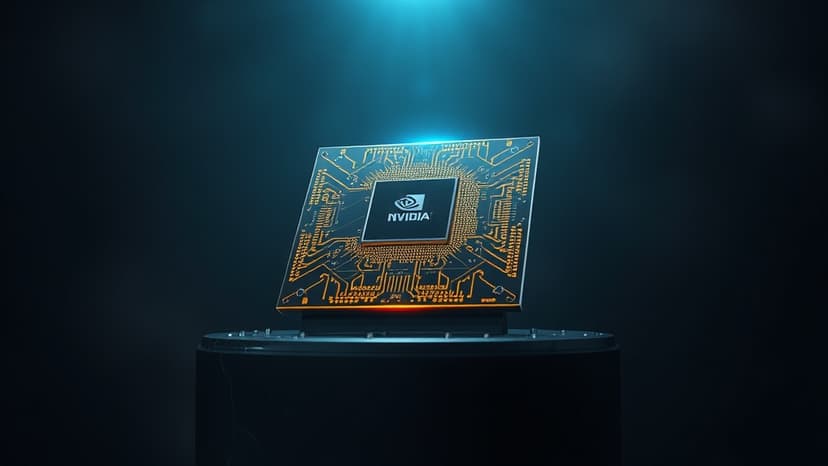
OpenAI has been exploring alternatives to Nvidia's artificial intelligence chips for inference tasks since last year, a move that could complicate the relationship between the two major players in the AI boom. This strategic shift focuses on chips for inference, the process by which AI models respond to user requests, an area now emerging as a competitive battleground.
While Nvidia dominates the market for training AI models, the pursuit of faster inference hardware by OpenAI and others marks a significant challenge to its AI leadership. This comes amidst ongoing investment talks where Nvidia had planned to invest up to $100 billion in OpenAI. These negotiations, expected to close soon, have now dragged on for months.
During this period, OpenAI has engaged with competitors like AMD and startups such as Cerebras and Groq for GPUs designed to rival Nvidia's offerings. These efforts are driven by OpenAI's need for new hardware to accelerate responses for specific applications, including coding assistance. The company relies heavily on Nvidia for its current inference fleet, but seeks improved performance per dollar.
Nvidia CEO Jensen Huang has dismissed reports of tension, calling them "nonsense." However, sources indicate OpenAI is dissatisfied with the speed of Nvidia's hardware for certain problem types, like software development and inter-AI communication. This dissatisfaction is particularly evident in OpenAI's Codex product, which assists in computer code creation.
Nvidia has also actively pursued companies developing SRAM-heavy chips, such as Cerebras and Groq, for potential acquisitions. While Cerebras declined an acquisition and opted for a commercial deal with OpenAI, Nvidia has since licensed Groq's technology. This move, alongside hiring Groq's chip designers, appears to be an effort by Nvidia to bolster its technology portfolio in a rapidly evolving AI industry.