Home / Technology / Nobel Laureate's Quantum Leap: Reshaping Tomorrow
Nobel Laureate's Quantum Leap: Reshaping Tomorrow
17 Nov
Summary
- Nobel Prize awarded for experiment transforming quantum physics.
- Work laid groundwork for today's superconducting quantum computers.
- Quantum computing could revolutionize encryption and medicine.
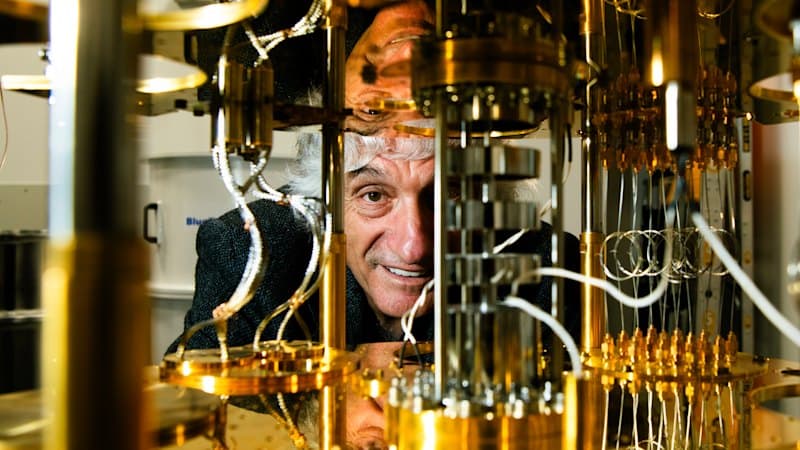
John Martinis, a Nobel laureate in Physics, was honored for an experiment conducted during his doctoral studies in the mid-1980s. This groundbreaking work was instrumental in translating the complex principles of quantum mechanics into practical applications. His research paved the way for the development of current superconducting quantum computers, a field now valued in the billions.
The experiment involved creating an artificial atom from an electrical circuit cooled to near absolute zero. This allowed scientists to observe quantum tunneling, a phenomenon where particles pass through barriers they shouldn't. This demonstration on a macroscopic scale was crucial for advancing quantum computing.
Martinis also led the Google team that claimed 'quantum supremacy' in 2019. Looking ahead, he anticipates that functional quantum computers could be available within five to ten years. These machines are expected to have profound impacts, potentially rendering current internet encryption obsolete while enabling unprecedented modeling of chemical reactions for new medicines and materials.


