
Home / Technology / X-59: NASA's Sonic Boom Killer Takes Flight
X-59: NASA's Sonic Boom Killer Takes Flight
4 May
Summary
- NASA pilots performed 'rollercoaster' maneuvers on the X-59.
- The X-59 aims to fly supersonic without a loud sonic boom.
- Tests expand envelope, gathering data on stability and control.
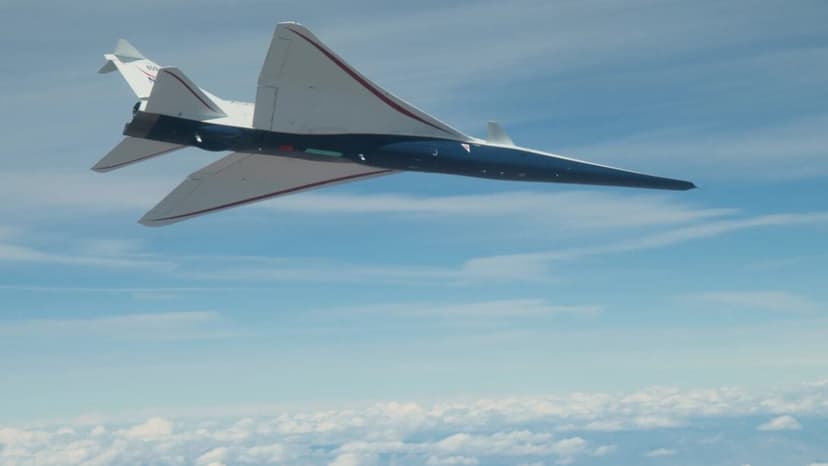
NASA pilots recently conducted a series of intense maneuvers with the X-59 supersonic aircraft in California's Mojave Desert as part of its ongoing test campaign. These "rollercoaster-style" climbs and descents are crucial for envelope expansion, a process where engineers push a new vehicle beyond its validated limits to gather essential flight data.
The X-59, a product of Lockheed Martin, is engineered to achieve supersonic speeds without the conventional loud sonic boom. Instead, it is designed to produce a significantly quieter sonic thump. This innovation aims to address the 1973 Federal Aviation Administration ban on non-military supersonic flights over land, which was enacted due to the disruptive noise.
During these recent tests, pilots performed a "rollercoaster maneuver" by pitching the aircraft up and down to understand aerodynamic forces and stability. They also executed a "bank-to-bank maneuver" by rolling the aircraft from side to side, and a "flutter excitation maneuver" to ensure structural safety margins. These actions help characterize the aircraft's handling and performance.
Launched on its inaugural flight on October 28, 2025, the X-59 has progressively been flown faster and higher. A specific flight on April 14 involved pushing the aircraft to higher altitudes and near-supersonic speeds. NASA plans to eventually fly the X-59 over selected U.S. communities to gauge public perception of its distinctive "sonic thumps."
