Home / Technology / Space AI: Musk's New Frontier Amidst Hurdles
Space AI: Musk's New Frontier Amidst Hurdles
5 Feb
Summary
- Musk aims for a million solar-powered data centers in space.
- Technical challenges include extreme heat and space debris.
- Rivals like Google and Blue Origin also explore orbital data centers.
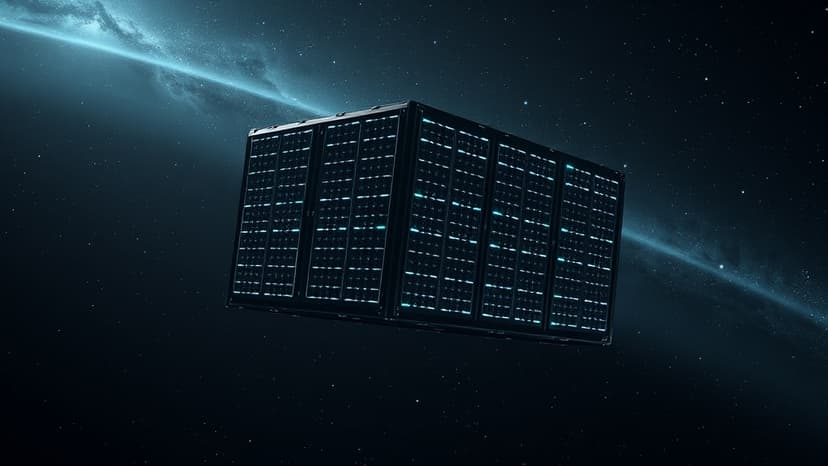
Elon Musk has unveiled an ambitious plan to place up to a million solar-powered data centers in orbit, aiming to facilitate widespread artificial intelligence use without straining Earth's power grids. This initiative combines SpaceX with his AI ventures, with plans for a significant public offering.
However, the endeavor faces formidable obstacles. Scientists point to the challenge of dissipating the intense heat generated by data centers in the vacuum of space, which requires novel, large-scale radiator technology. The proliferation of space debris also poses a critical risk, with potential cascading collisions that could disrupt vital services.
Furthermore, the durability of AI hardware, such as GPU chips, in the harsh space environment remains a concern. Unlike terrestrial data centers, in-orbit repairs are impossible, necessitating expensive overprovisioning of components. Several companies, including Google and Jeff Bezos's Blue Origin, are also exploring similar space-based data center concepts.
Musk's existing SpaceX rocket infrastructure provides a distinct advantage, potentially enabling lower launch costs for his ventures compared to competitors. This strategic positioning suggests a move to secure a leading role in the burgeoning space-based computing sector.