feedzop-word-mark-logo
searchLogin
Feedzop
homeFor YouIndiaIndia
You
bookmarksYour BookmarkshashtagYour Topics
Trending
Terms of UsePrivacy PolicyAboutJobsPartner With Us

© 2026 Advergame Technologies Pvt. Ltd. ("ATPL"). Gamezop ® & Quizzop ® are registered trademarks of ATPL.

Gamezop is a plug-and-play gaming platform that any app or website can integrate to bring casual gaming for its users. Gamezop also operates Quizzop, a quizzing platform, that digital products can add as a trivia section.

Over 5,000 products from more than 70 countries have integrated Gamezop and Quizzop. These include Amazon, Samsung Internet, Snap, Tata Play, AccuWeather, Paytm, Gulf News, and Branch.

Games and trivia increase user engagement significantly within all kinds of apps and websites, besides opening a new stream of advertising revenue. Gamezop and Quizzop take 30 minutes to integrate and can be used for free: both by the products integrating them and end users

Increase ad revenue and engagement on your app / website with games, quizzes, astrology, and cricket content. Visit: business.gamezop.com

Property Code: 5571

Home / Technology / Microscopic Robots Now Swim: A Medical Revolution?

Microscopic Robots Now Swim: A Medical Revolution?

29 Jan

•

Summary

  • Researchers created the smallest programmable robots ever built.
  • These robots move using electrokinetics without any moving parts.
  • Production costs could drop below one cent per robot.
Microscopic Robots Now Swim: A Medical Revolution?

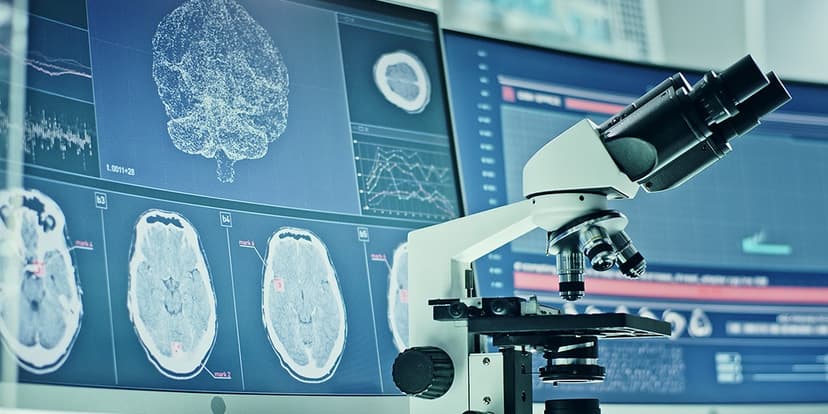
Researchers have overcome a long-standing physics barrier by developing the world's smallest fully programmable robots, each measuring about 200 by 300 by 50 micrometers. These microscopic machines are capable of autonomous movement, a feat previously confined to science fiction.

Instead of traditional propellers or legs, the robots utilize electrokinetics. They generate a small electrical field that manipulates surrounding ions to propel themselves through fluid. This design ensures extreme durability and ease of handling, even with delicate laboratory equipment.

Powered by minuscule solar cells generating only 75 nanowatts, these robots feature ultra-low voltage circuits and a highly compressed instruction set. They possess the ability to sense their environment, store data, and autonomously decide on their next action, mimicking natural communication through programmed wiggles.

trending

Meta stock surges after earnings

trending

PSG vs Newcastle Champions League

trending

Mbilli elevated to champion

trending

Kane scores, Bayern wins

trending

Atletico Madrid UEFA Champions League

trending

Lakers vs Cavaliers prediction

trending

Guardiola faces Galatasaray first time

trending

India vs New Zealand T20

trending

Chelsea faces Napoli in match

Current demonstrations show the robots exhibiting thermotaxis, autonomously swimming towards warmer areas. This capability hints at future applications such as monitoring inflammation or locating disease markers. The researchers are also exploring ultrasound as a potential power source for deeper environments.

Manufactured using standard semiconductor processes, these robots are cost-effective to produce in large quantities. With over 100 robots fitting on a single chip and yields exceeding 50 percent, the estimated cost could fall below one cent per robot, making disposable robot swarms a tangible possibility.

This advancement signifies that true autonomy at the microscale is now achievable. Potential future applications include targeted drug delivery, building materials from the bottom up, or exploring delicate environments inaccessible to larger machines.

Disclaimer: This story has been auto-aggregated and auto-summarised by a computer program. This story has not been edited or created by the Feedzop team.
These robots are the smallest fully programmable robots ever created and can swim using electrokinetics without any moving parts.
They are powered by tiny solar cells generating 75 nanowatts and are controlled through light signals, with communication mimicking bee dances.
Future applications include medical uses like tracking inflammation, building materials, and exploring delicate environments, with potential costs below one cent per robot.

Read more news on

Technologyside-arrow

You may also like

New Time Crystal Shatters Complexity Records

15 hours ago • 6 reads

article image

New Laser Patterning Speeds Heat Control

18 Jan • 18 reads

article image

Micron Ditches Crucial: AI Boom Drives Memory Prices Sky-High

12 Jan • 76 reads

article image

Robots Shuffle Cards & Grab Groceries at CES

7 Jan • 129 reads

article image

Grain-of-Sand Robots Powered by Light Developed

7 Jan • 114 reads

article image