Home / Technology / Tiny AI Outshines Giants in Science Replication
Tiny AI Outshines Giants in Science Replication
23 Aug
Summary
- Inherent's AI agent Faraday replicates scientific papers.
- Faraday uses a 27 billion parameter model, significantly smaller than competitors.
- The AI lab is based in London and founded by Google DeepMind alumni.
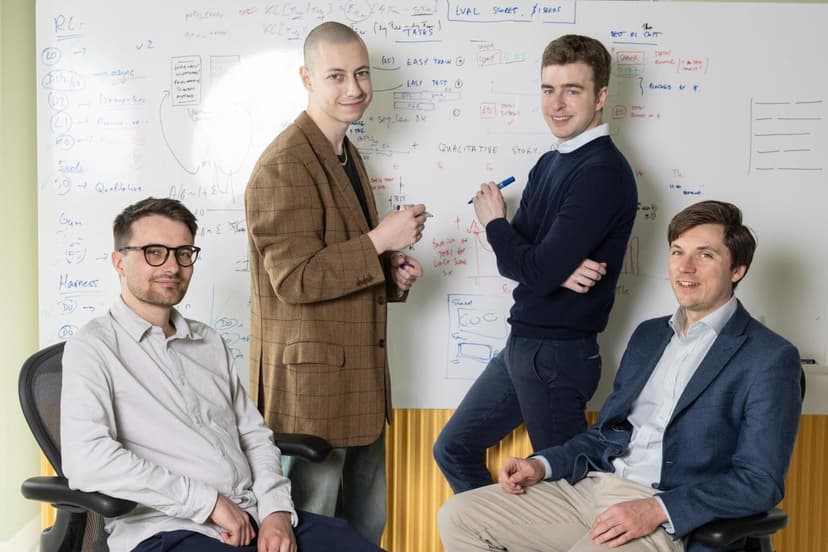
Inherent, an AI lab in London founded by Google DeepMind alumni, has unveiled its AI agent, Faraday. This agent has demonstrated the ability to independently reproduce the findings of published scientific papers, a task typically performed by human scientists.
Faraday achieved this feat while running on a comparatively small model with 27 billion parameters. This performance surpasses much larger AI systems from industry leaders like Anthropic and OpenAI. Inherent's goal extends beyond replication, aiming to develop AI capable of discovering novel scientific knowledge.
The startup emphasizes 'research taste,' an instinct for valuable experiments, as a key development goal. They utilize reinforcement learning and leverage existing tools like OpenAI's Codex, mirroring how human scientists collaborate and use established resources.
Inherent operates with a dozen employees in London's King's Cross, a hub for AI talent. The company supports ending 'garden leave' policies, which can hinder talent mobility. Inherent plans to expand its team by year-end, potentially attracting talent from established AI firms.


