Home / Technology / Phone Heatwave: IIT Madras Breakthrough Cools Devices
Phone Heatwave: IIT Madras Breakthrough Cools Devices
3 Aug
Summary
- New heat pipe design uses device thickness, not board area.
- O-rings improve cooling by 82% compared to gaskets.
- Aluminum devices outperformed copper in heat dissipation tests.
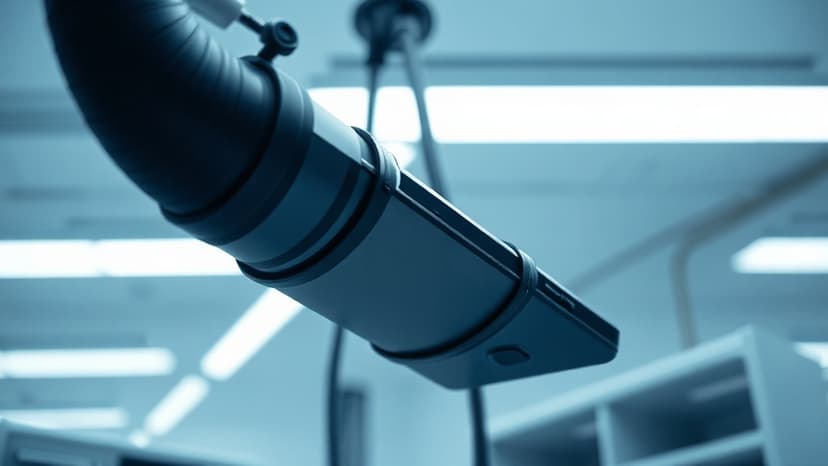
Devices like smartphones and laptops often overheat due to processors generating significant heat in confined spaces. A team at the Indian Institute of Technology Madras has devised a solution by creating a novel 'antiparallel' heat pipe. This design cleverly uses the device's thickness to transfer heat from one face to the opposite, unlike traditional pipes that use the same face.
This innovative approach allows heat to pass directly through the device's body. Tests revealed that using O-rings for sealing, instead of continuous gaskets, improved fluid resistance by 82%. Furthermore, devices constructed with aluminum demonstrated superior cooling over copper.
The IIT Madras team's research, published in Experimental Heat Transfer, highlights a significant step forward in thermal management for electronics. While still in the laboratory stage, the findings offer a promising path towards cooler, more efficient devices, addressing a critical challenge in modern technology.


