Home / Technology / Gaza Youth Build Future with Robotics Amidst Ruins
Gaza Youth Build Future with Robotics Amidst Ruins
20 Sep
Summary
- Young Gazans learn robotics using limited electronic components and circuit boards.
- Their projects could develop future early detection systems for hazards.
- Gaza's tech sector is devastated, with 70% of companies halted.
- The war has destroyed educational infrastructure and killed academics.
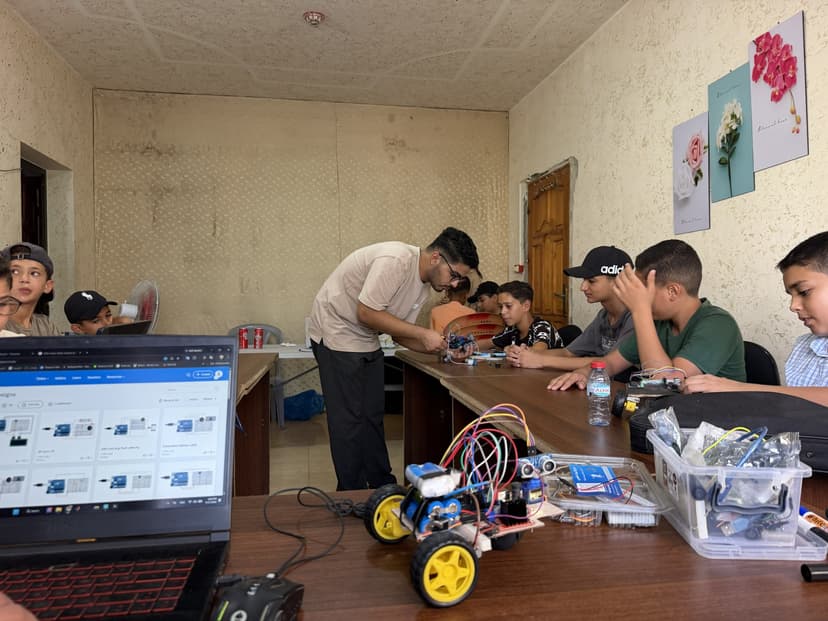
In Deir el-Balah, Gaza, a group of children are learning robotics and integrating sensors into alarm systems, using only basic electronic components and programmable circuit boards. This initiative, The Next Gen Team: Rising Robotics Engineer Project, aims to equip students with future sciences and technological advancements. The children's research into robotics and early warning systems could lead to critical developments like detecting gas leaks and fires or aiding rescue efforts.
Prior to the current war, Gaza had a thriving technology and innovation sector, featuring incubators that supported tech projects and startups. However, much of this infrastructure has been destroyed or damaged. Despite challenges like equipment shortages and electricity outages, students like 16-year-old Hamza al-Atrash are determined to learn and maintain their skills. He highlights that the lack of devices pushes them to find solutions with simple tools.
The war has severely impacted Gaza's education system, with schools and universities targeted. Preliminary estimates suggest approximately $4 billion in losses to the education sector. Seventeen higher education institutions have been destroyed or damaged, impacting about 710,000 students. The IT industry, once a promising sector and a source of foreign income, now operates at less than 25 percent of its pre-war capacity, with over 70 percent of IT companies halted.
Rebuilding Gaza's IT sector is further hindered by a severe shortage of vital equipment, with prices increasing by over 600 percent due to import difficulties. This has led to widespread job losses, with an estimated 30,000 IT professionals unemployed. Furthermore, a significant "brain drain" has occurred, with over 80 percent of highly skilled tech professionals leaving the Gaza Strip, posing a substantial challenge to the sector's future development and innovation.


