Home / Technology / RAG's Hidden Flaw: Fixing AI's Document Blindness
RAG's Hidden Flaw: Fixing AI's Document Blindness
1 Feb
Summary
- Standard RAG fails on technical documents by mishandling structure.
- Semantic chunking and multimodal textualization are key RAG improvements.
- Visual citation in RAG builds trust by showing AI's data sources.
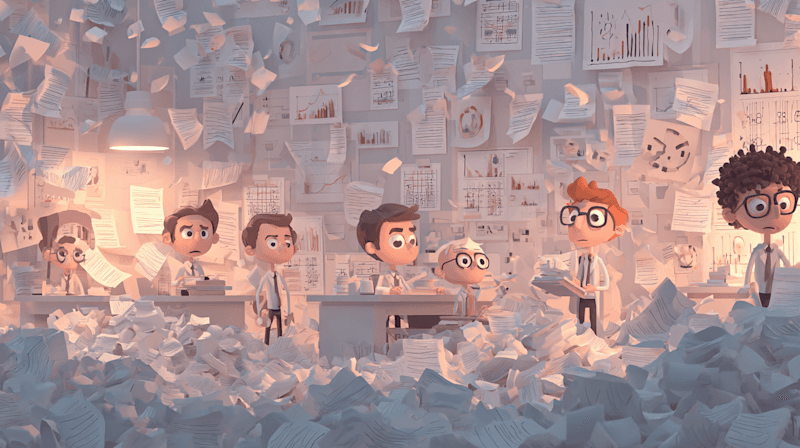
Current Retrieval-Augmented Generation (RAG) systems often fall short for industries reliant on heavy engineering documentation. Their failure stems from standard preprocessing methods that treat documents as flat text, fragmenting vital information like tables and captions. This 'fixed-size chunking' prevents accurate retrieval, leading to AI hallucinations when engineers query technical manuals.
The solution involves moving beyond arbitrary character counts to 'semantic chunking,' which leverages document structure like chapters and sections. This approach ensures logical cohesion and preserves table integrity, significantly improving data retrieval accuracy. Internal tests show a marked reduction in the fragmentation of technical specifications.
Furthermore, RAG systems are often blind to visual data, such as flowcharts and schematics, which constitute significant corporate intellectual property. To address this, 'multimodal textualization' uses vision-capable models to process images before indexing. This enables RAG to retrieve information even when the source is a diagram.