Home / Technology / Extreme Tests Forge Safer EV Batteries
Extreme Tests Forge Safer EV Batteries
19 Sep
Summary
- Batteries endure car washes, sandstorms, and fire.
- Testing ensures safety for electric vehicles and storage.
- EU regulations mandate rigorous battery stress tests.
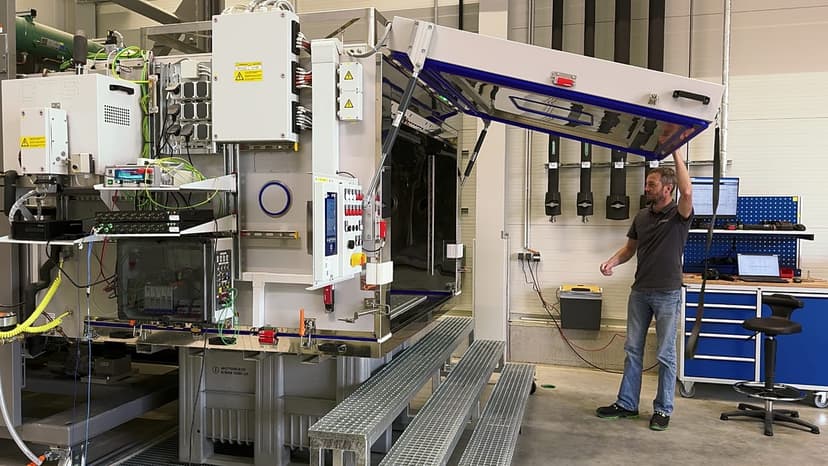
Eastern Germany hosts some of the world's most advanced battery testing facilities, designed to simulate extreme environmental conditions. These 'torture chambers' subject battery prototypes to rigorous stress tests, including submersion in water, exposure to sandstorms, and intense heat mimicking wildfires. The DEKRA facility in Klettwitz, Lusatia, conducts these crucial evaluations to ensure batteries perform safely under all circumstances.
Tests range from extreme temperatures, from Siberia to the Sahara, to mechanical impacts like driving over a curb. Full-blown sandstorms and high-voltage current simulations are also performed. These procedures are mandated by the EU's Battery Regulation, which prioritizes sustainability, the value chain, and consumer safety.
Beyond vehicle batteries, the centre also tests large-scale stationary energy storage systems essential for renewable energy sources like solar and wind. These systems must remain safe during potential fire events, accidents, or improper usage. Crushing tests ensure that batteries remain secure even under extreme pressure, with safety measures like pressure relief flaps in place.
These state-of-the-art laboratories are considered a 'key component' of the energy transition. By ensuring that batteries meet all safety requirements, they facilitate the reliable storage of renewable power and contribute to a safer, more sustainable energy future. The DEKRA Group is also committed to its own sustainability, expanding solar PV systems and using battery storage to recover energy.


