Home / Technology / China's Sky-High Turbines Float to Power
China's Sky-High Turbines Float to Power
5 Mar
Summary
- Airborne wind systems use 90% less material than traditional turbines.
- Latest prototype, S2000, successfully powered grid from 2,000 meters.
- Future prototypes may offer power, communication, and computing services.
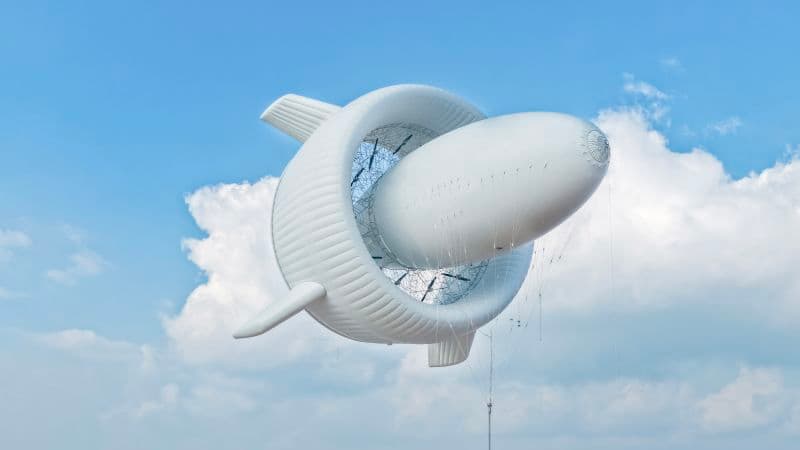
China is advancing a novel approach to wind energy with its Stratospheric Airborne Wind Energy Systems (SAWES) project. Spearheaded by Tsinghua University and a startup, this initiative features large, helium-filled aerostats designed to float thousands of feet in the air, transmitting electricity via tether cables. These systems are presented as a portable, low-impact alternative to traditional wind turbines.
The SAWES Type S2000, the first megawatt-class airborne wind power generation system, completed a significant test in January in Yibin, Sichuan Province. Floating at 2,000 meters (6,600 feet), it successfully connected to the power grid, generating 385 kilowatt hours of electricity. This model is considerably smaller than conventional turbines, using up to 90% less material and avoiding disruptive concrete foundations.
Project researchers highlight environmental advantages, including minimal visual and sonic impact, and reduced disruption to soil ecosystems. They also suggest aerial turbines are easier for birds to avoid. Potential applications include powering remote or environmentally sensitive areas, with future developments aiming for multifunctional aerostats offering power, communication, and computing services, potentially integrating with space satellites and ground networks.