Home / Technology / China's Space Armada: A Gigantic Feint?
China's Space Armada: A Gigantic Feint?
16 Feb
Summary
- China plans 203,000 satellites by mid-2030s.
- SpaceX leads with nearly 10,000 orbiters deployed.
- China's large proposal may be regulatory hurdle for rivals.
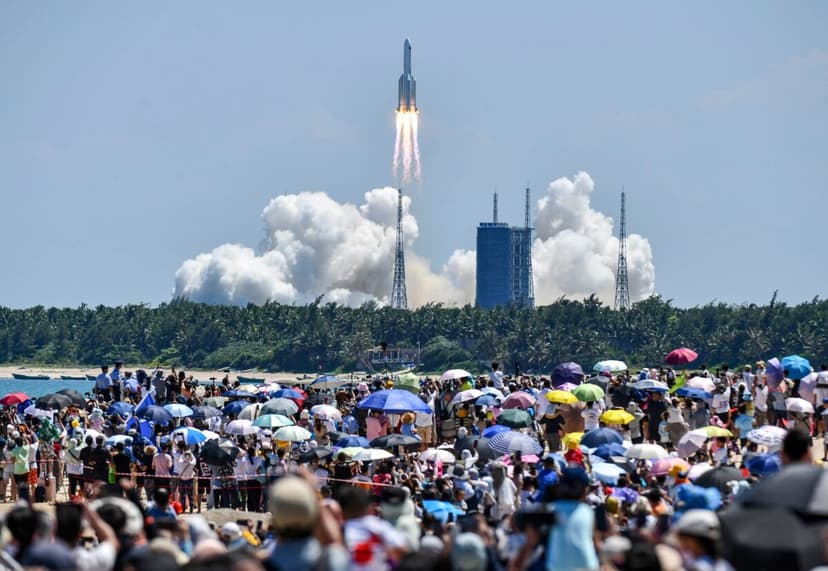
China has submitted plans to the International Telecommunications Union (ITU) for a fleet of 203,000 satellites by the mid-2030s. This number far exceeds the current operations of SpaceX's Starlink, which has nearly 10,000 orbiters, and Amazon's Leo constellation. While appearing as a significant expansion, experts suggest China's proposal may be a strategic maneuver to create regulatory hurdles for competitors.
The rapid increase in orbiting objects is driven by innovations like reusable rockets and lighter components, dramatically lowering launch costs. Since 2020, the number of satellites has quadrupled to over 16,000, with SpaceX alone adding thousands annually. This surge raises concerns about overcrowding, potential Kessler syndrome, and radio interference, especially within the crowded Low Earth Orbit.
Some analysts propose that many of China's planned satellites are "paper satellites" designed to reserve orbital slots and force rivals to mitigate interference. This tactic could potentially throttle the performance of Western networks. Despite China's large proposal, Elon Musk's SpaceX maintains a commanding lead due to its advanced reusable rocket technology, which significantly reduces launch costs and increases deployment speed.
This space race for internet and communication dominance hinges on megaconstellations in Low Earth Orbit. While China is developing its own reusable rocket capabilities, SpaceX's current technological advantage and rapid launch cadence position it as the frontrunner. The potential $1.5 trillion valuation for SpaceX reflects the immense future market and technological leadership in this domain.