feedzop-word-mark-logo
searchLogin
Feedzop
homeFor YouIndiaIndia
You
bookmarksYour BookmarkshashtagYour Topics
Trending
Terms of UsePrivacy PolicyAboutJobsPartner With Us

© 2026 Advergame Technologies Pvt. Ltd. ("ATPL"). Gamezop ® & Quizzop ® are registered trademarks of ATPL.

Gamezop is a plug-and-play gaming platform that any app or website can integrate to bring casual gaming for its users. Gamezop also operates Quizzop, a quizzing platform, that digital products can add as a trivia section.

Over 5,000 products from more than 70 countries have integrated Gamezop and Quizzop. These include Amazon, Samsung Internet, Snap, Tata Play, AccuWeather, Paytm, Gulf News, and Branch.

Games and trivia increase user engagement significantly within all kinds of apps and websites, besides opening a new stream of advertising revenue. Gamezop and Quizzop take 30 minutes to integrate and can be used for free: both by the products integrating them and end users

Increase ad revenue and engagement on your app / website with games, quizzes, astrology, and cricket content. Visit: business.gamezop.com

Property Code: 5571

Home / Technology / Brighter Days Ahead: New OLED Panels Hit 4500 Nits

Brighter Days Ahead: New OLED Panels Hit 4500 Nits

5 Jan

•

Summary

  • New OLED panels can achieve 4,500 nits of peak brightness.
  • Actual TV brightness will be closer to 3,000 nits.
  • The technology uses advanced light efficiency and absorption.
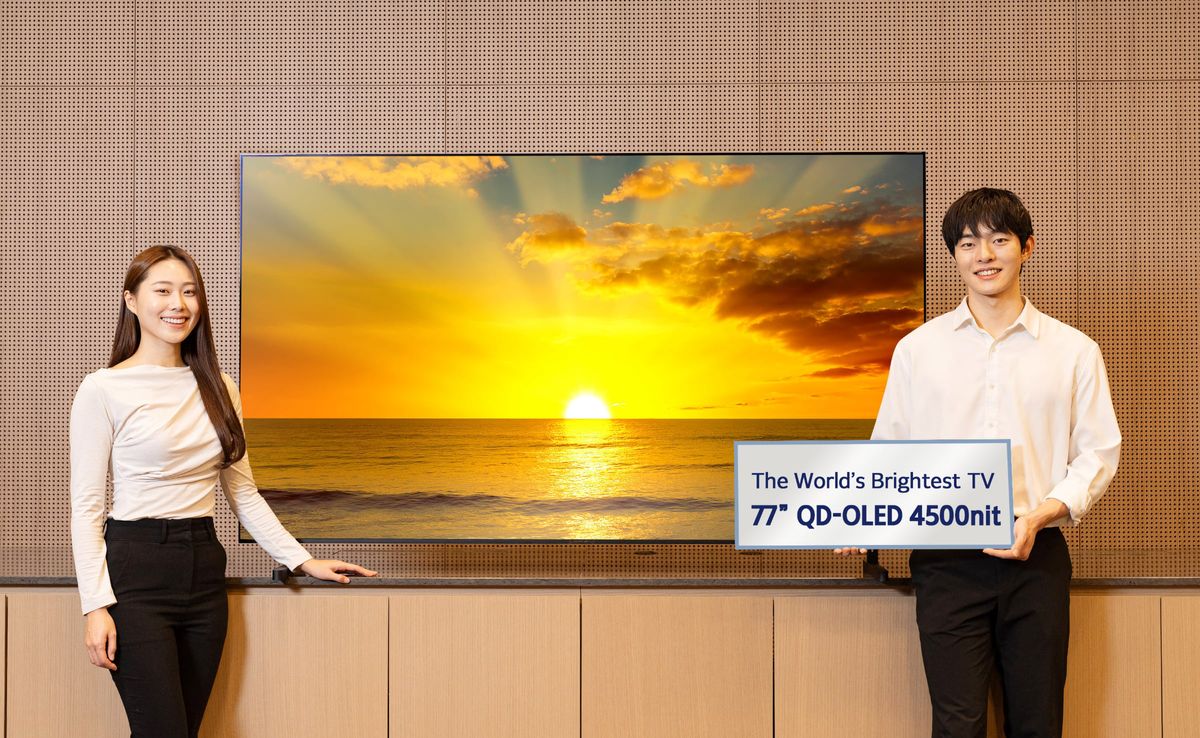
Brighter Days Ahead: New OLED Panels Hit 4500 Nits

LG Display and Samsung Display are set to revolutionize home entertainment with new OLED panels boasting an impressive 4,500 nits of peak brightness. This advancement, expected to reach consumers by 2026, signifies a major leap in display technology, promising more vibrant and detailed images.

The Tandem WOLED panel from LG and Samsung's QD-OLED panel both achieve this remarkable peak brightness. However, these figures represent optimal lab conditions. Real-world television brightness will likely be closer to 3,000 nits after calibration, still a significant upgrade.

These next-generation panels feature advanced light-absorption and diffusion technologies, minimizing reflections and enhancing overall picture quality. While exact screen sizes remain unconfirmed, rumors suggest Samsung's panels may top out at 77 inches and LG's at 83 inches.

Disclaimer: This story has been auto-aggregated and auto-summarised by a computer program. This story has not been edited or created by the Feedzop team.
trending

Uber outperforms broader market

trending

Gabion Technologies IPO Oversubscribed

trending

Foggy conditions expected inshore

trending

Nigeria Algeria Africa Cup History

trending

Cameroon vs Morocco quarter-final

trending

Sunrisers Eastern Cape victorious

trending

SA20: Second-best league after IPL

trending

Wolvaardt nominated for ICC award

trending

Prabhas' Raja Saab strong opening

While the panels are expected by 2026, actual TV availability with these specifications is anticipated shortly after.
Real-world brightness is expected to be around 3,000 nits, significantly brighter than current models.
LG's uses Primary RGB Tandem technology, while Samsung utilizes optimized organic materials and advanced light management.

Read more news on

Technologyside-arrow

You may also like

OLED Laptops Get Smarter Power Savings

7 Jan • 13 reads

article image

LG's New OLED Tech Redefines Monitor Brilliance

6 Jan • 13 reads

article image

Samsung's S95H: Wireless OLED TV Option Unveiled

8 Jan • 11 reads

article image

LG's Pencil-Thin Wallpaper TV Redefines Home Entertainment

5 Jan • 23 reads

article image

Samsung's 2026 TVs: Brighter OLEDs, Micro LEDs Debut

5 Jan • 26 reads

article image