Home / Technology / Bee AI Wearable: Personal Assistant or Privacy Nightmare?
Bee AI Wearable: Personal Assistant or Privacy Nightmare?
24 May
Summary
- Bee records, transcribes, and summarizes conversations as a personal assistant.
- The device requires extensive mobile permissions, raising privacy concerns.
- Bee shows professional promise but may be too invasive for personal use.
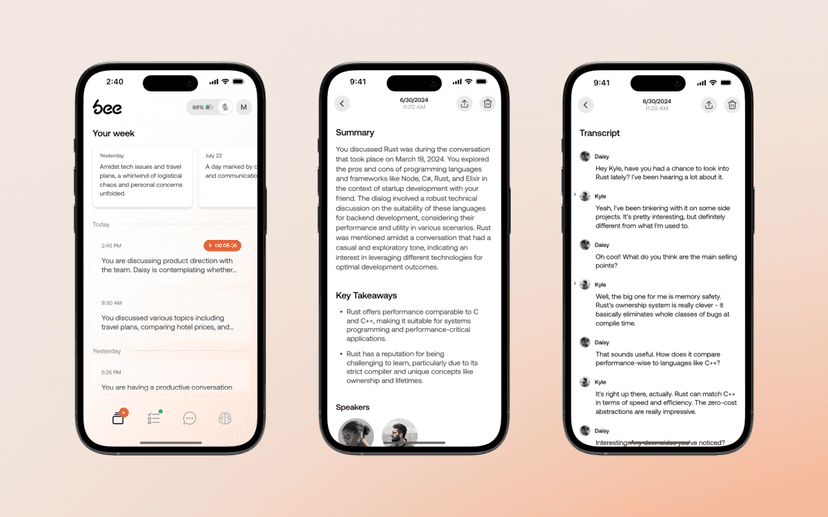
The Bee AI wearable, now under Amazon's ownership, offers to be a digital assistant by recording, transcribing, and summarizing user conversations. This functionality aims to aid organization, particularly in professional settings like meetings, by providing easy-to-review summaries and detailed transcriptions, similar to existing services.
However, the device's appeal is tempered by considerable privacy implications. Bee requires broad mobile permissions, including access to location, photos, contacts, and calendar data, which is concerning for privacy-conscious individuals. While the company asserts robust data security measures, including encryption and third-party audits, its extensive data collection stored in the cloud remains a point of apprehension.
Despite these privacy concerns, Bee demonstrates potential for professional applications. It can help professionals manage busy schedules by summarizing daily interactions. Yet, its primary marketing as a personal device is questionable given the invasive nature of its data requirements. The prospect of a fully local processing version, hinted at previously, could significantly alter its privacy profile, but Amazon has yet to confirm such developments.


