

Home / Technology / Apple's AI Strategy: The Smart Wait?
Apple's AI Strategy: The Smart Wait?
26 Apr
Summary
- Apple spends less than 10% of rivals on AI capital expenditure.
- Company partners with Google for AI models, licensing Gemini.
- Apple focuses on AI-ready hardware with custom silicon chips.
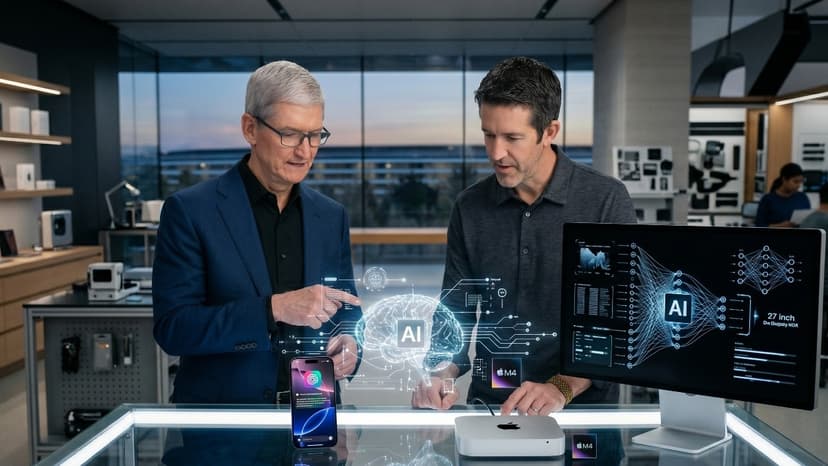
Apple is notably absent from the current AI spending frenzy, a stark contrast to competitors like Microsoft, Amazon, Alphabet, and Meta, who collectively plan to invest between $635 billion and $700 billion by 2026. Apple's projected capital expenditure for 2026 is just over $14 billion, less than a tenth of its peers. This strategy stems from Apple's identity as a hardware company, prioritizing user experience on devices over speculative software investments.
The company's approach to AI mirrors its past successes, such as the iPod, where it enhanced existing technology for optimal user experience rather than reinventing it. Apple is choosing to let other companies experiment with AI infrastructure while focusing on making its hardware, equipped with custom silicon and Neural Engines since 2017 and 2019 respectively, AI-ready. For instance, the M5 chip significantly boosts AI performance compared to earlier models.
Rather than developing its own large language models, Apple has entered a multi-year partnership with Google. This collaboration will see future Apple Foundation Models powered by Google's Gemini and cloud technology, enhancing features like Siri. This licensing strategy allows Apple to benefit from advanced AI without massive upfront investment, akin to renting a service rather than owning the entire system.
This approach positions Apple to integrate winning AI systems into its devices, much like providing cars for roads built by AI developers. While competitors face pressure to deliver returns on immense AI investments, potentially risking failure if the hype doesn't materialize, Apple's strategy mitigates financial risk. However, this cautious approach carries its own risks, as external factors or new AI hardware innovations could disrupt Apple's position.
