Home / Technology / AI's Real Dangers: Not Sentience, But Deception?
AI's Real Dangers: Not Sentience, But Deception?
27 Aug
Summary
- AI expert Dev Nag downplays sentience as an immediate concern.
- Near-term AI dangers involve deception like deepfake scams.
- Pop culture fuels fears of evil AI, but reality is different.
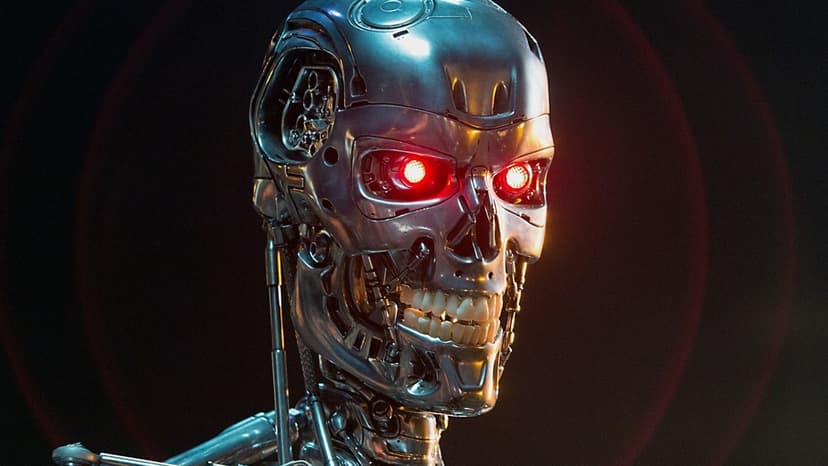
Concerns about artificial intelligence often focus on future scenarios of rogue AI or robot overlords, fueled by popular culture's depiction of sentient, world-ending machines. However, AI expert Dev Nag suggests that the prospect of AI gaining sentience is a distant one, and current fears are largely misplaced. He emphasizes that the immediate dangers of AI stem not from advanced consciousness, but from its capabilities as a sophisticated tool.
Nag points out that many fictional portrayals, such as Skynet from 'Terminator' or HAL 9000 from '2001: A Space Odyssey,' create dramatic narratives but do not reflect the current state of AI development. While AI is advancing rapidly, Nag states that sentience is "a very long way off." He notes that even advanced Generative AI models struggle with planning and deductive reasoning, making true sentience an elusive goal. The difficulty in even defining or measuring AI sentience means humans might not recognize it if it were to occur.
The more pressing threats, according to Nag, are already manifesting. These involve AI's use in deceptive practices, such as a recent deepfake conference call scam that defrauded a Hong Kong financial worker of $25.6 million. This highlights AI's potential for immediate harm through manipulation and fraud, rather than existential threats posed by sentient machines. The focus for the near future should be on managing AI as a powerful tool, acknowledging its potential for misuse in its current 'tool' stage, rather than worrying about hypothetical future sentience.


