Home / Technology / AI Masters Math: Mathematicians Awed by AI's Proof Power
AI Masters Math: Mathematicians Awed by AI's Proof Power
10 Mar
Summary
- AI tools now solve research-level math problems and verify proofs.
- Companies like OpenAI and Google DeepMind achieved top Olympiad scores.
- AI formalization of proofs is rapid, surpassing human speed.
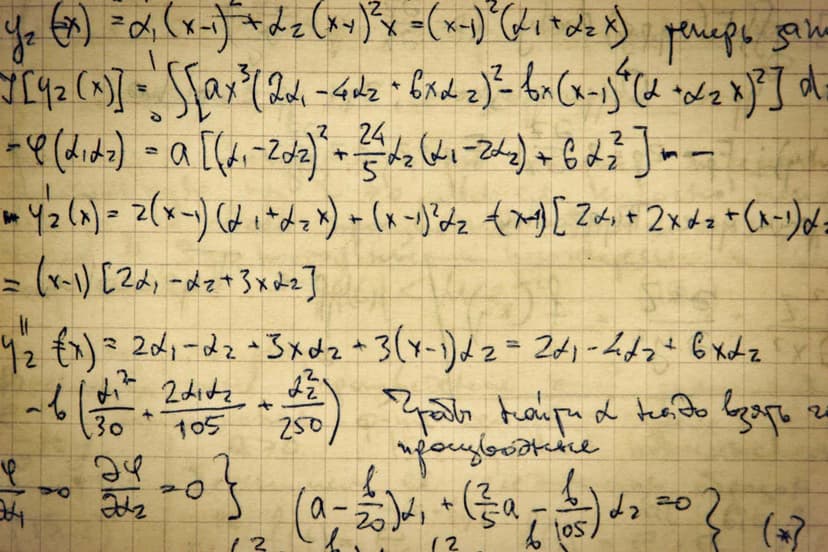
The astonishing speed of artificial intelligence in mastering mathematics has caught many experts by surprise. Once considered incapable of high-level mathematical tasks, AI now solves research problems and verifies complex proofs, a significant leap from just a few years ago. Elite competitions like the International Mathematical Olympiad have seen AI achieve gold-medal performances, while tools are now used to address problems posed by renowned mathematicians like Paul Erdős.
Recent breakthroughs showcase AI's advanced capabilities. Projects like 'First Proof' saw AI models from OpenAI and Google DeepMind attempt challenging, naturally occurring mathematical problems. Google's Aletheia, a sophisticated AI tool, uses advanced algorithms to generate and verify solutions iteratively. Simultaneously, AI is revolutionizing proof verification through formalization, translating natural language proofs into computer-checkable formats.
An AI tool named Gauss by Math, Inc. recently formalized and verified a Fields medal-winning proof concerning sphere packing. This proof, a monumental 200,000 lines of code, was accomplished with assistance from human mathematicians who provided foundational definitions and structure. While AI-generated proofs may be longer than human equivalents, their speed and accuracy promise to transform mathematical practice, including peer review processes.
However, this rapid AI advancement raises concerns about the loss of the learning process for human mathematicians. Some experts worry that over-reliance on AI for problem-solving could hinder the development of intuition and the crucial 'struggle' that solidifies knowledge. Yet, as AI handles computational tasks, mathematicians anticipate a shift in focus, much like manual calculations were automated in the past, leading to a new style of mathematical practice.