
Home / Technology / AI Revolutionizes Race Car Aerodynamics
AI Revolutionizes Race Car Aerodynamics
30 Apr
Summary
- AI can run race car aerodynamic simulations in seconds.
- Dallara provides CFD data for AI training.
- AI accurately models downforce and drag with minimal error.
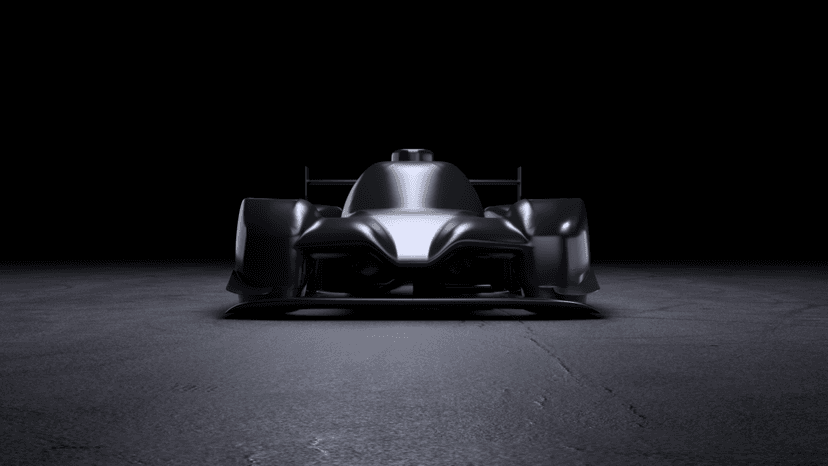
The evolution of race car design has heavily relied on understanding airflow, moving from reducing drag to generating downforce. Initial aerodynamic development involved expensive track testing, later supplemented by wind tunnels. Computational Fluid Dynamics (CFD) simulations then offered a virtual testing ground, becoming crucial as track testing became restricted.
Now, artificial intelligence is emerging as the next frontier. Research by IBM and Dallara demonstrates AI surrogates that can execute complex aerodynamic simulations in mere seconds, a task that previously took hours. This breakthrough significantly accelerates the design process for racing cars.
Dallara, a key player in motorsport manufacturing, has provided extensive CFD data, including details on wheel wakes and underfloor aerodynamics, for training AI models. The Gauge-Invariant Spectral Transformer (GIST) developed by IBM has shown superior performance, achieving accuracy in drag and downforce prediction.
In Formula 1, AI has been integrated for several seasons to maximize the value of limited CFD and wind tunnel testing. Companies like Neural Concept are helping F1 teams leverage machine learning for aerodynamic modeling and other challenges, enabling millions of data points from a fraction of the usual simulation runs.
