feedzop-word-mark-logo
searchLogin
Feedzop
homeFor YouIndiaIndia
You
bookmarksYour BookmarkshashtagYour Topics
Trending
Terms of UsePrivacy PolicyAboutJobsPartner With Us

© 2026 Advergame Technologies Pvt. Ltd. ("ATPL"). Gamezop ® & Quizzop ® are registered trademarks of ATPL.

Gamezop is a plug-and-play gaming platform that any app or website can integrate to bring casual gaming for its users. Gamezop also operates Quizzop, a quizzing platform, that digital products can add as a trivia section.

Over 5,000 products from more than 70 countries have integrated Gamezop and Quizzop. These include Amazon, Samsung Internet, Snap, Tata Play, AccuWeather, Paytm, Gulf News, and Branch.

Games and trivia increase user engagement significantly within all kinds of apps and websites, besides opening a new stream of advertising revenue. Gamezop and Quizzop take 30 minutes to integrate and can be used for free: both by the products integrating them and end users

Increase ad revenue and engagement on your app / website with games, quizzes, astrology, and cricket content. Visit: business.gamezop.com

Property Code: 5571

Home / Technology / AI to Secure Earth's Crowded Orbit

AI to Secure Earth's Crowded Orbit

26 Jan

•

Summary

  • Orbital infrastructure faces challenges from 11,000+ active satellites.
  • AI enhances space situational awareness and debris detection capabilities.
  • A Planetary Neural Network (PNN) is proposed to manage orbital hazards.
AI to Secure Earth's Crowded Orbit

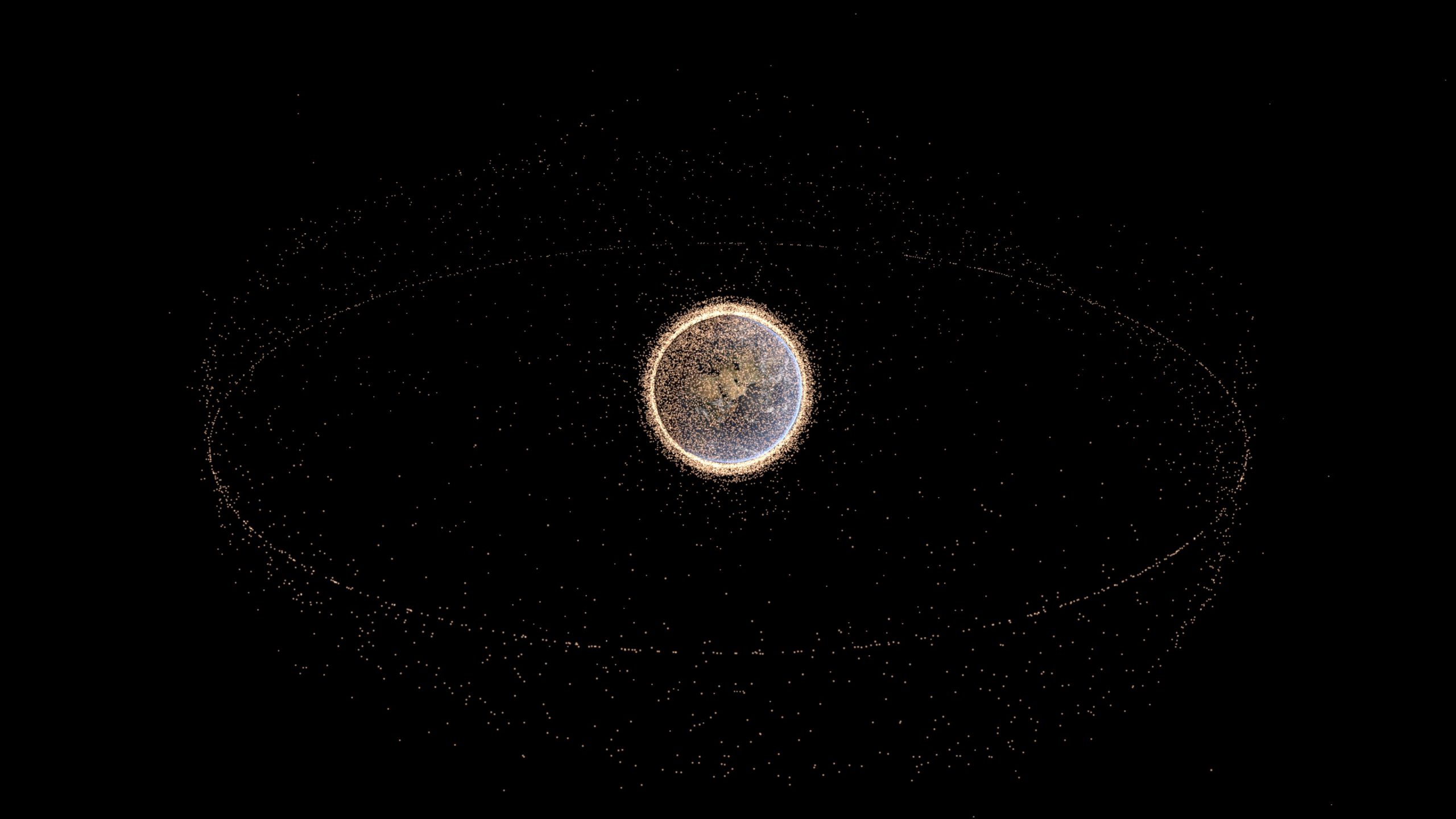
Earth's orbital space is increasingly crowded, with over 11,000 active satellites and a projected increase to 30,000-60,000 by 2030, alongside millions of pieces of debris. This escalating situation strains traditional monitoring systems and raises concerns about collision risks, including the potential for Kessler syndrome. As commercial launches accelerate, managing orbital hazards requires advanced Space Situational Awareness (SSA).

AI is revolutionizing space security by improving the detection and classification of orbital objects, especially smaller debris. Machine learning algorithms like Convolutional Neural Networks (CNNs) and Long Short-Term Memory (LSTM) networks enhance signal processing from optical and radar sensors, allowing for more accurate tracking and prediction, even with incomplete data.

The concept of a Planetary Neural Network (PNN) is proposed as a global 'central nervous system' for orbital awareness. This system would integrate diverse data sources to create a real-time picture of the space environment. Key challenges to its implementation include data interoperability, requiring standardized formats and time synchronization.

trending

Padma Awards: Unsung heroes honoured

trending

Mumbai Metro Line 11

trending

Border 2 box office success

trending

Australian Open Heat Suspends Play

trending

MPESB Police Answer Key 2026

trending

Arne Slot on Mo Salah

trending

BBL 2026 Qualifier prediction

trending

Man wins £79,000 Range Rover

trending

Samsung Galaxy S26 Ultra

False positives, or phantom detections, are a significant hurdle for AI in space tracking. The PNN aims to mitigate this through multi-sensor cross-verification and temporal consistency analysis. Assigning confidence scores to detections and using ensemble learning across multiple AI models further refines accuracy. Human operators remain essential for reviewing ambiguous cases, creating a feedback loop for continuous model improvement.

Looking ahead, AI is poised to enable autonomous collision prediction, real-time interference detection, and automated countermeasures. This advancement promises to enhance satellite operational lifespans and maintain the safety and security of space infrastructure, marking AI as a game-changer for space safety.

Disclaimer: This story has been auto-aggregated and auto-summarised by a computer program. This story has not been edited or created by the Feedzop team.
AI enhances space situational awareness by improving the detection and classification of orbital objects, especially smaller debris, using machine learning algorithms.
The Planetary Neural Network (PNN) is a proposed global system integrating diverse data sources to create a real-time picture of the space environment for managing orbital hazards.
AI helps prevent false positives through multi-sensor cross-verification, temporal consistency analysis, confidence scoring, and ensemble learning across multiple AI models.

Read more news on

Technologyside-arrowArtificial Intelligence (AI)side-arrow

You may also like

AI Offers New Hope for Depression Treatment

19 Jan • 40 reads

article image

AI Progress Shifts: System Design Over Model Size

18 Jan • 35 reads

article image

AI Brain Scans: Detecting Alzheimer's Early?

13 Jan • 77 reads

article image

AI Wearable Remembers Like Humans

2 Jan • 20 reads

article image

AI Uncovers New MS Subtypes

1 Jan • 104 reads

article image