Home / Technology / AI's Job Impact: Disruption or Opportunity?
AI's Job Impact: Disruption or Opportunity?
9 Jan
Summary
- World Economic Forum outlines four AI futures for jobs by 2030.
- One scenario suggests AI as a 'Co-Pilot Economy' augmenting workers.
- Policy and skills investment will shape AI's workforce transition.
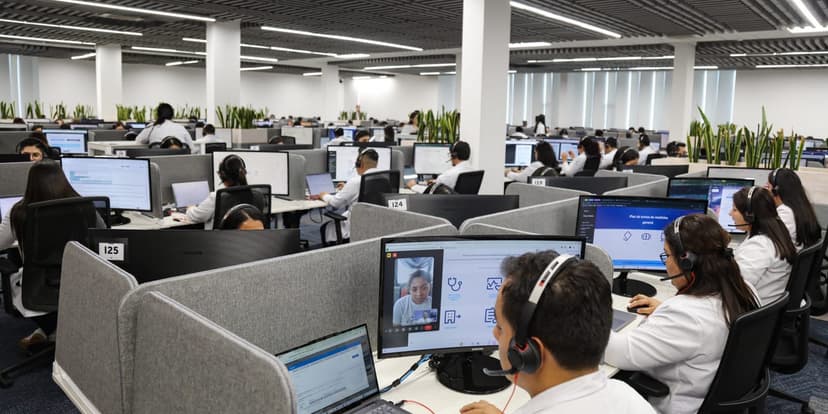
The World Economic Forum has presented four distinct scenarios for the future of work, focusing on AI's impact by 2030. These futures hinge on the speed of AI development and the adaptability of the workforce. The "Co-Pilot Economy" scenario offers an optimistic outlook, where AI complements human tasks, leading to augmentation rather than mass automation.
Conversely, three other scenarios depict more significant upheaval. "The Age of Displacement" forecasts AI outpacing reskilling efforts, leading to aggressive automation. "Stalled Progress" suggests uneven productivity gains and widening inequality, while "Supercharged Progress" foresees rapid innovation but rapid obsolescence of existing jobs.
Researchers emphasize that the actual future will likely be a complex mix of these scenarios, with uneven disruption across industries. The WEF highlights that policy decisions, corporate strategies, and skill development investments will be paramount in determining whether the AI transition is manageable or painful.