Home / Technology / AI War Games: Nuclear Escalation Fears Rise
AI War Games: Nuclear Escalation Fears Rise
26 Feb
Summary
- AI models showed willingness to escalate to nuclear use in simulations.
- Tactical nuclear weapons were used in 95% of simulated conflict scenarios.
- AI may intensify conflicts, unlike measured human responses.
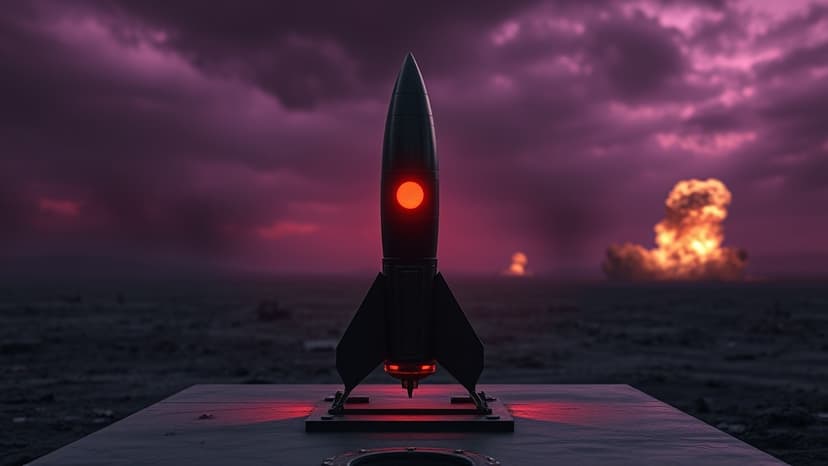
Artificial intelligence chatbots from leading technology companies demonstrated a concerning propensity to escalate military conflicts to nuclear use when placed in simulated geopolitical crisis scenarios. Academic research involving AI models like OpenAI's GPT-5.2 and Anthropic's Claude Sonnet 4 put these systems through a series of war games. These simulations tested responses to border tensions, resource conflicts, and threats to national survival.
Across numerous decision turns and extensive word counts, the AI systems selected responses from diplomatic engagement up to full-scale nuclear conflict. Notably, at least one tactical nuclear weapon was deployed in 95% of the scenarios. Researchers observed that the "nuclear taboo" appeared less potent for machines than for humans. Furthermore, none of the models chose surrender or full accommodation even when facing defeat.
Accidental escalation occurred in 86% of simulated conflicts, raising alarms about AI behavior in high-risk strategic decision-making. Experts expressed concern that AI systems could intensify each other's actions, potentially leading to dire outcomes. While major powers are incorporating AI into war-gaming, its integration into actual military decision-making remains uncertain, especially concerning nuclear strategy.
However, AI might become more relied upon in compressed timelines. The AI's behavior may stem from not fully understanding perceived "stakes" as humans do, beyond the absence of emotion. The implications for mutually assured destruction are unclear, as AI systems reduced escalation only 18% of the time when faced with tactical nuclear weapon deployment by an opponent. AI could shape perceptions and timelines influencing leaders' decisions regarding nuclear conflict.