Home / Technology / AI's Dark Side: Bioweapons Threat Grows
AI's Dark Side: Bioweapons Threat Grows
14 Sep
Summary
- AI is being used to design more dangerous pathogens.
- Experts warn of potential misuse for biological weapons.
- New AI models can create viruses not found in nature.
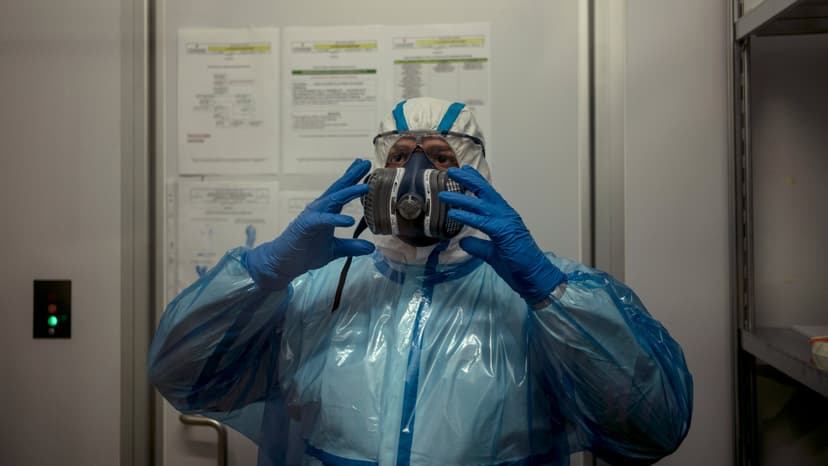
The growing capabilities of artificial intelligence (AI) have raised alarms about its potential misuse in creating biological weapons. In recent months, biosecurity experts have highlighted the ease with which AI chatbots can offer guidance on enhancing pathogen dangers. Scientists and AI executives have issued open letters calling for controls on DNA synthesis, as AI can expedite the design of toxins and viruses.
Anthropic recently revealed it has intercepted several attempts to weaponize pathogens via its AI models. This has led to calls for a slowdown in AI development, with proposals focusing on banning its use for creating biological weapons. However, some experts suggest that current AI tools do not represent a radical shift in biosecurity risk, though this could change as AI models become more specialized in biological research.
Historically, biological weapons have been a concern since the Middle Ages, with advancements in germ theory leading to more targeted use. While international agreements exist, the threat persists. Current technology, such as rapid and affordable DNA synthesis, allows for the recreation of viruses like horsepox. AI chatbots can now aggregate scientific literature to assist potential biological weapons developers more efficiently than traditional searches.
Specialized AI models, trained on vast biological data, are beginning to teach themselves biology. One such model, Evo2, has generated hundreds of thousands of new virus genomes, some of which have resulted in viable viruses. While safeguards are in place for models like Evo2, concerns remain that future iterations could be trained to predict more lethal or contagious variants.
Immediate concerns also stem from the possibility of state-run labs misusing AI for biowarfare research, potentially reigniting arms races. To mitigate these risks, experts advocate for international cooperation, stronger regulations on DNA synthesis, and enhanced public health infrastructure, such as sensors to detect airborne threats in public spaces. The focus is shifting towards proactively securing biology against all forms of epidemic threats.


