

Home / Technology / Farming's Future: Robots Tackle Labor Crisis
Farming's Future: Robots Tackle Labor Crisis
5 Apr
Summary
- Global farm labor shortages are intensifying due to aging farmers and fewer young workers.
- Robotics and AI offer solutions by automating repetitive and hazardous agricultural tasks.
- Nebraska's The Combine incubator supports agtech startups in automation and intelligent systems.
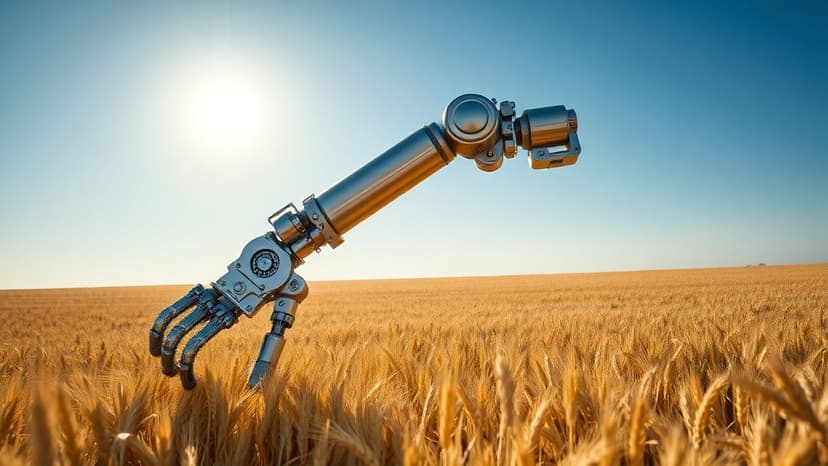
Agriculture is grappling with a significant labor shortage, exacerbated by an aging farming population and declining numbers of younger workers entering the field. Globally, farm employment is contracting while the demand for agricultural output is steadily increasing, creating a critical gap. This challenge is driving the industry to explore advanced technologies, particularly robotics and artificial intelligence.
These innovations are viewed not as replacements for human workers, but as tools to manage repetitive, hazardous, or labor-intensive jobs. Companies supported by agtech incubators like The Combine in Lincoln, Nebraska, are developing solutions across the supply chain. Examples include robotic grain extraction systems, automated meat processing equipment, and AI tools for land management.
Advances in component costs for hardware, such as LIDAR sensors, combined with extensive agricultural data for training AI models, have made robotics more viable. While a fully automated 'lights-out' farm is likely decades away for open-field production, AI is expected to significantly enhance farmer decision-making within the next decade. Controlled environments like greenhouses may see faster adoption of automation.
Despite trends towards consolidation, family-owned farms are expected to remain dominant in the U.S. The future farmer will likely leverage AI-driven platforms, shifting from direct operators to strategic decision-makers, enhancing efficiency and profitability. The focus is on technology that provides a clear return on investment, reflecting a disciplined approach by farmers.
