Home / Sports / Messi's slow strolls unlock defenses, study finds
Messi's slow strolls unlock defenses, study finds
12 May
Summary
- Messi's walking conserves energy and fools opponents.
- Soccer analytics can be exhausting, say experts.
- Markov chains help analyze player performance quantitatively.
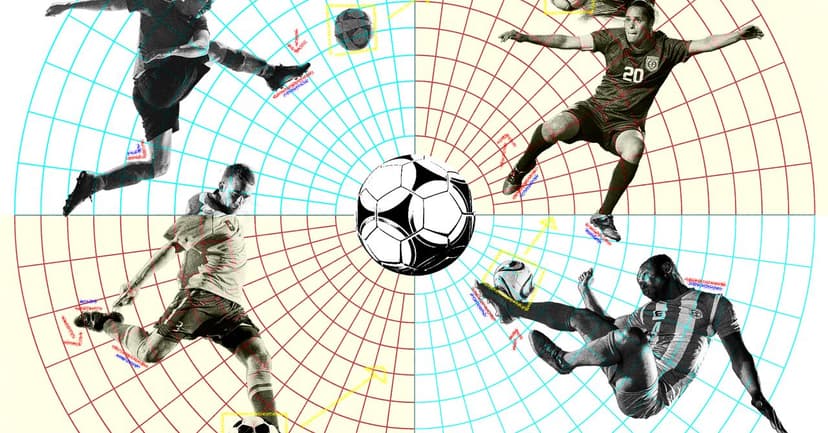
Research reveals that Lionel Messi's deliberate slow pace on the soccer field is not a sign of disengagement but a calculated strategy. His "walking behavior" allows him to effectively claim valuable space and influence the game, outperforming players who rely solely on active movement.
This new understanding of player performance is partly thanks to advancements in soccer analytics. Experts like Sarah Rudd, who helped pioneer the field, describe it as an "exhausting" yet crucial aspect of modern sports. Rudd's early work in the 2010s utilized Markov chains, a statistical tool developed in 1906, to quantitatively assess individual player contributions beyond basic statistics.
Rudd's research, which involved dividing the pitch into states based on player location and ball possession, won her a competition and a role at StatDNA. She later worked with Arsenal, her favorite team, for nearly a decade, becoming head of analytics. She now runs her own consulting firm.
Despite the data available, soccer analytics still faces challenges. Analysts like Rudd note the complexity of the game, where numerous strategies can lead to victory, and the difficulty of creating a "blanket" that covers all aspects of play. The debate continues on fundamental tactics, such as possession versus counter-attacking.
Further analysis of Rudd's foundational work in 2011 highlights evolving approaches. Her initial method of dividing the pitch into equal squares is now seen as simplistic, as current understanding recognizes more complex, non-linear "zones" of play. These zones are influenced by dynamic tactical trends, underscoring the continuous evolution of soccer analytics.


