Home / Sports / F1 Shakes Up: New Hybrid Era Ignites Speed, Strategy
F1 Shakes Up: New Hybrid Era Ignites Speed, Strategy
1 Mar
Summary
- New hybrid engines offer nearly equal power from combustion and electric sources.
- Cars are smaller, lighter, and feature active aerodynamics for agility.
- Drivers must master new terms like 'boost mode' and 'super-clipping'.
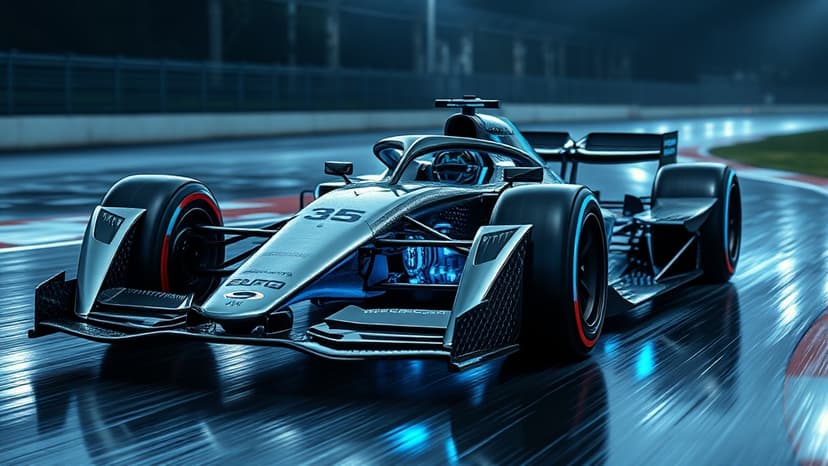
Formula 1 is set to commence a new era next weekend with significant regulatory changes promising an unpredictable season, starting with the Australian Grand Prix. Cars have been redesigned to be smaller and lighter, reducing wheelbase and width, with an overall weight decrease of 30kg. These adjustments aim for improved handling and agility, though drivers anticipate a slight reduction in downforce and pace compared to previous models.
The most substantial alteration involves new hybrid engines, which now deliver power almost equally from their internal combustion engines and electrical systems. The 1.6-litre V6 turbocharged engine, running on sustainable fuel, will be paired with a significantly expanded motor generator unit—kinetic (MGU-K), offering a nearly 300% increase in electrical energy delivery. Notably, the MGU-H has been removed, reintroducing turbo lag as a factor drivers must manage.
Active aerodynamics will see front and rear wings capable of adjusting on straights to reduce drag and closing through corners. This system replaces the long-standing DRS. Additionally, a new driver-actuated 'overtake mode' allows for temporary deployment of extra electrical energy, usable in increments or all at once, provided the energy is later recovered.
Drivers will face a steep learning curve managing energy, employing strategies like lift-and-coast and 'super-clipping'—recharging the battery at full throttle on straights, which causes a temporary power loss. The return of 'flat' floors marks an end to the ground-effect era, reducing downforce but improving the ability for cars to follow each other closely. Narrower tires also contribute to reduced drag and weight, though they decrease mechanical grip.
Furthermore, all fuels must now be 100% sustainable, sourced from synthetic or biofuel made from non-food biomass or waste products. The efficiency of electrical energy management is expected to be a key differentiator for teams and drivers alike, presenting a complex challenge as the sport adapts to these groundbreaking changes.