feedzop-word-mark-logo
searchLogin
Feedzop
homeFor YouIndiaIndia
You
bookmarksYour BookmarkshashtagYour Topics
Trending
Terms of UsePrivacy PolicyAboutJobsPartner With Us

© 2026 Advergame Technologies Pvt. Ltd. ("ATPL"). Gamezop ® & Quizzop ® are registered trademarks of ATPL.

Gamezop is a plug-and-play gaming platform that any app or website can integrate to bring casual gaming for its users. Gamezop also operates Quizzop, a quizzing platform, that digital products can add as a trivia section.

Over 5,000 products from more than 70 countries have integrated Gamezop and Quizzop. These include Amazon, Samsung Internet, Snap, Tata Play, AccuWeather, Paytm, Gulf News, and Branch.

Games and trivia increase user engagement significantly within all kinds of apps and websites, besides opening a new stream of advertising revenue. Gamezop and Quizzop take 30 minutes to integrate and can be used for free: both by the products integrating them and end users

Increase ad revenue and engagement on your app / website with games, quizzes, astrology, and cricket content. Visit: business.gamezop.com

Property Code: 5571

Home / Science / Africa's Population Boom by 2100: A Global Shift

Africa's Population Boom by 2100: A Global Shift

12 Dec, 2025

•

Summary

  • India is projected to remain the most populous nation by 2100.
  • China's population is expected to significantly decrease by 2100.
  • African nations like Tanzania and DRC show highest growth rates.
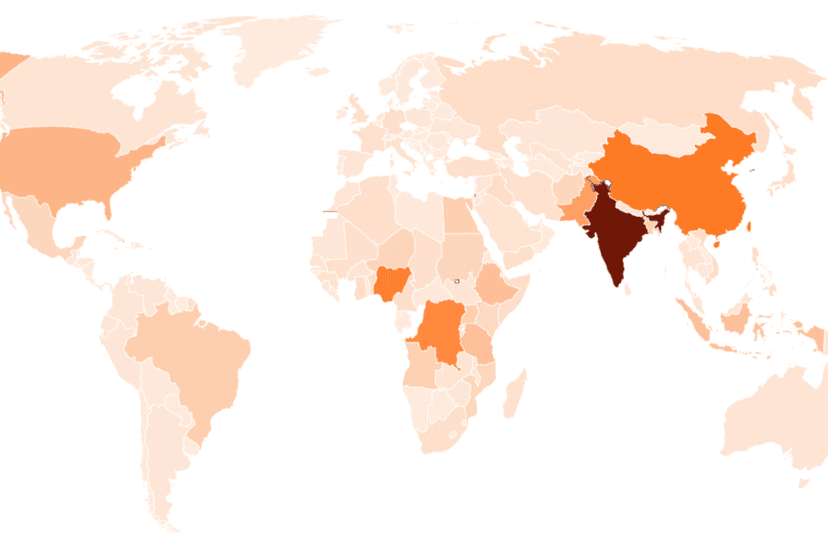
Africa's Population Boom by 2100: A Global Shift

By the close of the 21st century, global population distributions are poised for substantial transformation. India is anticipated to maintain its status as the world's most populous country, while China faces a considerable population decrease. Projections indicate a notable rise in population across various African nations, with Tanzania, Mauritania, Benin, and the Democratic Republic of the Congo leading in growth rates.

These demographic realignments carry profound implications for economic development, social welfare, and international influence. Sub-Saharan Africa is expected to contribute significantly to global population increases. Fertility rates in this region remain higher compared to many other parts of the world, with ideal family sizes often exceeding six in several countries.

Conversely, many developed nations are experiencing declining birth rates as societal norms evolve. The U.S. has seen discussions regarding low birth rates, highlighting a desire for population growth. As these shifts unfold, nations will need to adapt to both the challenges and opportunities presented by a dramatically altered demographic future.

Disclaimer: This story has been auto-aggregated and auto-summarised by a computer program. This story has not been edited or created by the Feedzop team.
India is projected to remain the country with the largest population by the year 2100.
Tanzania, Mauritania, Benin, and the Democratic Republic of Congo are expected to have the highest population growth rates by 2100.
China's population is forecast to decrease substantially, from over 1.4 billion today to an estimated 662 million by 2100.

Read more news on

Indiaside-arrowScienceside-arrowChinaside-arrow
trending

UPPSC exam cancelled after leak

trending

District employees commit fraud

trending

Meta hires Microsoft's Mahoney

trending

Dnipro hit by Russian drones

trending

Karnataka High Court e-procurement overhaul

trending

WPL 2026 schedule announced

trending

Sarfaraz Khan scores 157

trending

PSG wins Trophée des Champions

trending

Real Madrid vs Atlético Madrid

You may also like

Myanmar Scams: Foreigners Detained, Regime Seeks Repatriation

15 Dec, 2025 • 148 reads

article image

World's Dirtiest Nations Revealed: Air Quality Crisis

10 Dec, 2025 • 188 reads

article image

Under-5 Deaths Linked to Growth Failure Top 1 Million Worldwide

4 Dec, 2025 • 258 reads

article image

AgriVijay Eyes Global Leap: UAE, Mauritius Next?

1 Dec, 2025 • 211 reads

article image

Rainforests Now Fueling Climate Breakdown

28 Nov, 2025 • 415 reads

article image