feedzop-word-mark-logo
searchLogin
Feedzop
homeFor YouIndiaIndia
You
bookmarksYour BookmarkshashtagYour Topics
Trending
trending

AIIMS INI CET Seat Allotment

trending

Vietnam infrastructure drive launched

trending

Scorchers beat Sixers

trending

Sanju Samson replaces injured Gill

trending

Hardik Pandya's fastest T20I fifty

trending

Hang Seng wins streak

trending

George Linde joins Notts

trending

Suryakumar Yadav fails again

trending

Abhishek Sharma misses Kohli's record

Terms of UsePrivacy PolicyAboutJobsPartner With Us

© 2025 Advergame Technologies Pvt. Ltd. ("ATPL"). Gamezop ® & Quizzop ® are registered trademarks of ATPL.

Gamezop is a plug-and-play gaming platform that any app or website can integrate to bring casual gaming for its users. Gamezop also operates Quizzop, a quizzing platform, that digital products can add as a trivia section.

Over 5,000 products from more than 70 countries have integrated Gamezop and Quizzop. These include Amazon, Samsung Internet, Snap, Tata Play, AccuWeather, Paytm, Gulf News, and Branch.

Games and trivia increase user engagement significantly within all kinds of apps and websites, besides opening a new stream of advertising revenue. Gamezop and Quizzop take 30 minutes to integrate and can be used for free: both by the products integrating them and end users

Increase ad revenue and engagement on your app / website with games, quizzes, astrology, and cricket content. Visit: business.gamezop.com

Property Code: 5571

Home / Science / Winter Solstice 2025: Darkest Day Arrives!

Winter Solstice 2025: Darkest Day Arrives!

17 Dec

•

Summary

  • Astronomical winter begins December 21st with the Northern Hemisphere tilted furthest from the sun.
  • The winter solstice marks the year's shortest daylight hours in the Northern Hemisphere.
  • Earth's tilted axis, a result of ancient solar system collisions, causes the seasons.
Winter Solstice 2025: Darkest Day Arrives!

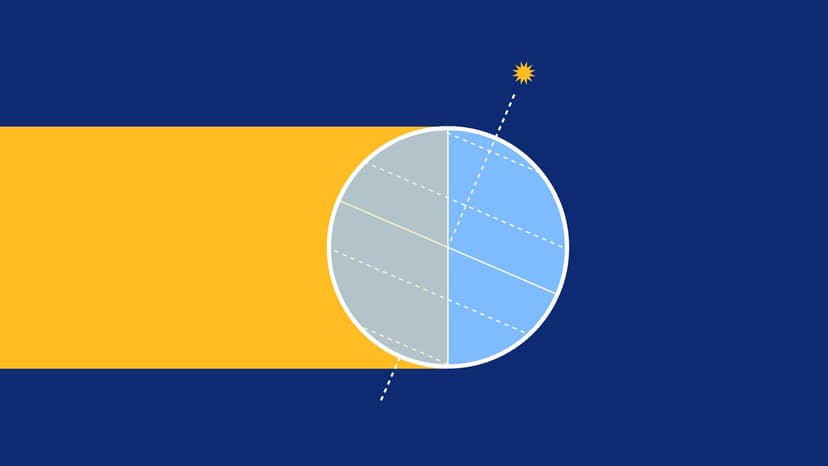
On December 21st, the Northern Hemisphere officially ushers in astronomical winter, coinciding with the winter solstice. This moment signifies the Earth's Northern Hemisphere being tilted at its furthest point away from the sun. Consequently, this day experiences the fewest hours of daylight in the Northern Hemisphere.

The Earth's axial tilt, a phenomenon likely resulting from early solar system impacts billions of years ago, is the fundamental cause of our planet's seasons. As the Northern Hemisphere tilts away from the sun during winter, it receives less solar energy, leading to colder temperatures and shorter days.

Following the winter solstice, daylight hours will progressively increase until the summer solstice in 2026, which represents the longest day of the year. This contrasts with equinoxes in March and September, when day and night are approximately equal, marking the start of spring and autumn respectively.

Disclaimer: This story has been auto-aggregated and auto-summarised by a computer program. This story has not been edited or created by the Feedzop team.
The winter solstice for the Northern Hemisphere officially begins on December 21st, marking the shortest day of the year.
The winter solstice occurs because the Northern Hemisphere is tilted furthest away from the sun, resulting in fewer daylight hours.
Solstices mark the beginning of astronomical summer and winter, with extreme daylight hours, while equinoxes in spring and autumn have roughly equal day and night.

Read more news on

Scienceside-arrowEarthside-arrow

You may also like

Polar Ice Melt Threatens Indonesia with Floods

5 Dec • 57 reads

article image

Winter Arrives: When is the 2025 Winter Solstice?

2 Dec • 54 reads

article image

White Christmas Hope: UK Weather Models Hint at Cold Snap

25 Nov • 80 reads

article image

Winter's Chill: Protect Your Garden Now!

22 Nov • 66 reads

article image

Rare November Stratospheric Warming Event Threatens Winter Forecast

15 Nov • 117 reads