Home / Science / California Flowers Show Rapid Evolution
California Flowers Show Rapid Evolution
13 Mar
Summary
- Scarlet monkeyflowers survived California's worst drought in 1,200 years.
- Rapid genetic evolution, known as evolutionary rescue, aided their survival.
- This phenomenon was documented in wild populations for the first time.
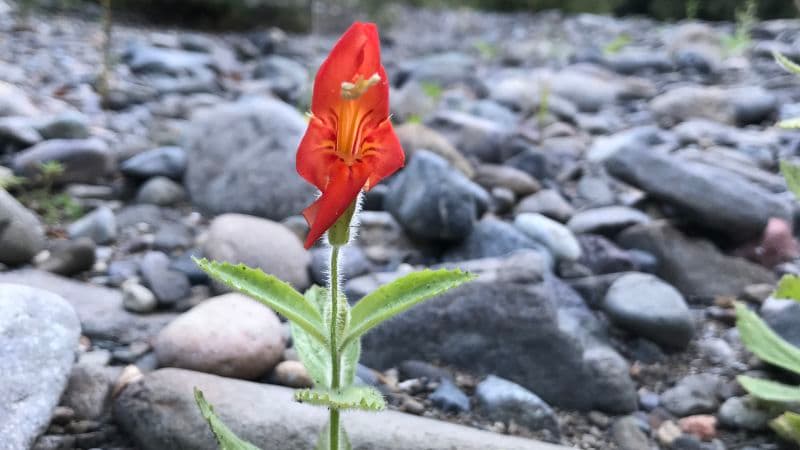
During California's unprecedented 1,200-year drought, the scarlet monkeyflower (Mimulus cardinalis) demonstrated remarkable resilience through rapid genetic evolution. This finding marks the first documented instance of evolutionary rescue in a wild setting.
Researchers observed significant population declines, some up to 90%, between 2012 and 2015. However, the wildflowers adapted by evolving drought-avoidance strategies, leading to population recovery within two to three years.
This evolutionary rescue process, previously only observed in lab settings or with limited evidence in the wild, provided rigorous proof of adaptation. The study's detailed genetic analysis revealed that pre-existing genetic mutations conferring drought resistance were leveraged by surviving plants.
Conservationists emphasize that maintaining genetic diversity and habitat connectivity is crucial for species to adapt to escalating climate change pressures and other stressors.
Experts consider this research a significant breakthrough, offering hope that some species may evolve rapidly enough to withstand climate disruption, though much remains unknown about broader ecological responses.