


Home / Science / Voyager 1 Shuts Down Instrument to Save Power
Voyager 1 Shuts Down Instrument to Save Power
27 Apr
Summary
- Voyager 1 shut down a science instrument to conserve power.
- A 'Big Bang' upgrade aims to extend the probe's lifespan.
- Voyager 1 is over 16 billion miles from Earth.
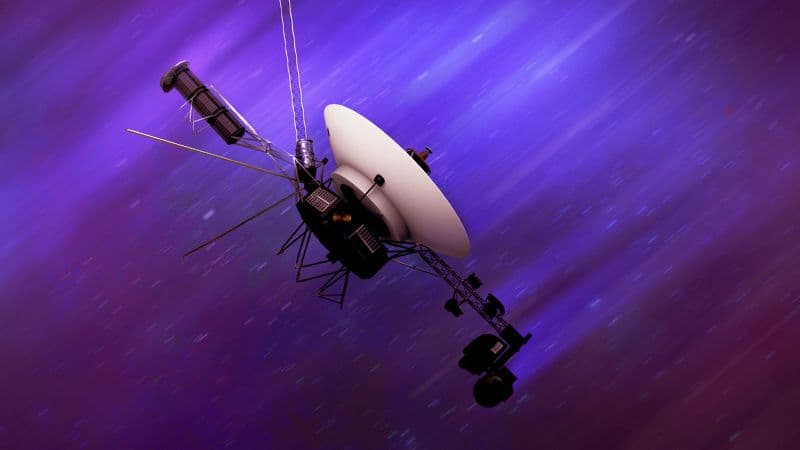
NASA has initiated a crucial power-saving measure for Voyager 1, the farthest human-made object from Earth. On April 17, 2026, engineers sent commands to deactivate the Low-energy Charged Particles experiment (LECP). This action is intended to preserve the spacecraft's limited power supply as it continues its journey through uncharted interstellar space.
The LECP instrument, which has been operational for nearly 49 years, was the top priority for shutdown from a pre-compiled list. This move is a strategic step to manage the probe's gradual power loss, estimated at 4 watts annually due to its radioisotope thermoelectric generators.
Engineers are preparing for a significant upgrade nicknamed 'the Big Bang.' This complex maneuver aims to reconfigure the spacecraft's power distribution, potentially allowing some instruments, including the LECP, to be reactivated. Voyager 2 will undergo a test of this procedure in May and June 2026, with Voyager 1 scheduled for July 2026 if the initial test is successful.
This careful balancing act is vital to keep Voyager 1 operational. By shutting down non-essential systems, the mission team hopes to extend the probe's lifespan, potentially enabling it to reach its 50th anniversary and continue sending back invaluable data from the depths of interstellar space.
